

 English
 русский
 عربى
 Español
Article Directory
- 1 Material Selection Sets the Performance Floor
- 2 Tolerances Decide Whether the Chain and Sprocket Stay Quiet
- 3 Heat Treatment Is the Difference Between a Warranty Claim and a Quiet Engine
- 4 System Compatibility: Four Components, One Decision
- 5 Standards, Testing, and the Audit Paper Trail
- 6 Supply Chain and Manufacturing Capacity
- 7 FAQ
- 7.1 What documents should an OEM buyer request before vetting a timing component supplier?
- 7.2 How do OEM and aftermarket timing components differ in their standards?
- 7.3 Why is a timing chain kit better than sourcing individual components?
- 7.4 What is the most common timing component failure mode that procurement teams should target?
Every timing component that leaves a factory becomes part of a matched system. The buyer inspects material certificates, hardening logs, and tolerance data before a part number gets approved.
Huzhou Nanxun Jingtong Auto Parts Manufacturing Co., Ltd., a Chinese manufacturer of timing chains, sprockets, tensioners, and guides, supplies wholesale and OEM programs under this exact discipline. For a procurement team, the question is not whether a part looks right, but which evidence proves it will still run correctly at 150,000 kilometers. That evidence needs to be available before the first sample leaves the factory, because a timing chain kit that matches a part number today can fail at 50,000 kilometers if the pin material, heat treatment profile, or guide compound was substituted.
Material Selection Sets the Performance Floor
Base alloy determines whether a timing chain survives 150,000 kilometers or fails at 60,000. That single sentence is the reason OEM buyers ask for a chemical composition report before they ask for a price.
Timing chain pins, rollers, and side plates require high-carbon chromium alloy steel. The carbon content raises the achievable hardness, while the chromium addition provides the corrosion resistance that the part needs during long service exposures. When the material is downgraded to a lower carbon content, chain elongation accelerates, the tensioner runs out of travel, and timing drift triggers a check-engine light. A dependable supplier publishes the alloy grade and provides a mill certificate with every batch.
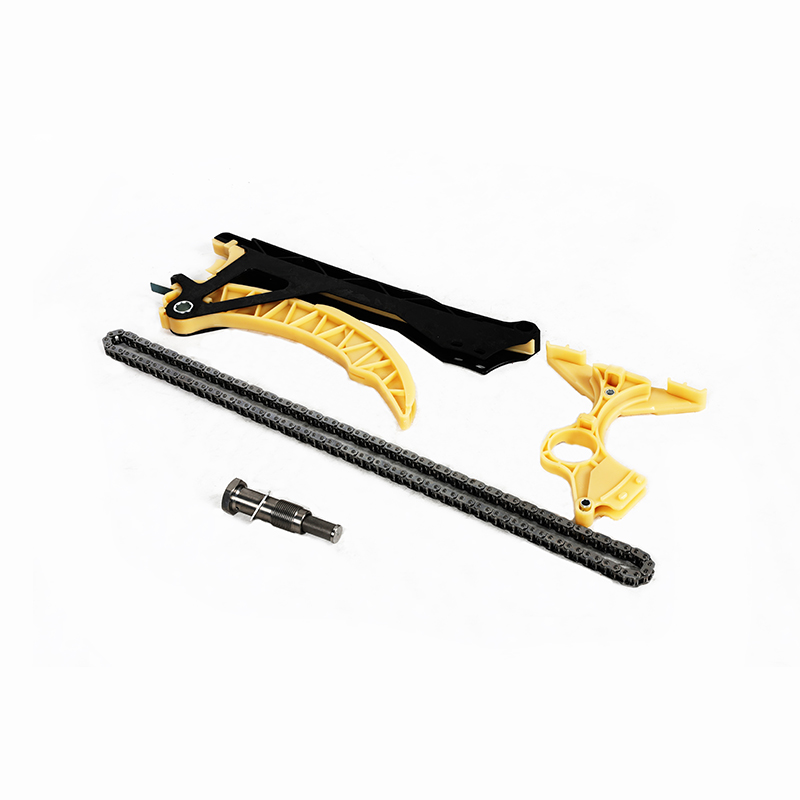
 High-Carbon Chromium Alloy Steel Timing ChainsExplore timing chains made from high-carbon chromium alloy steel, balancing hardness and corrosion resistance to prevent elongation and timing drift. Verify supplier alloy grades and mill certificates for reliable engine performance.View Product →
| Checkpoint | Reference Standard | What the Auditor Looks For |
| Alloy composition | GB/T14212-2003 | Mill certificate matching the approved grade |
| Pin and roller hardness | HRC 58-62 after treatment | Consistent readings across the batch |
| Guide rail compound | PA66 plus glass fiber | Confirmed fiber content, no recycled substitution |
| Elongation after tension test | Less than 0.5% load stretch | No visible permanent deformation |
Tolerances Decide Whether the Chain and Sprocket Stay Quiet
Timing noise is a tolerance problem, not a material problem. The chain wraps around the sprocket, and a deviation of a few microns in tooth flank geometry can produce an NVH complaint that a warranty team rejects.
The critical dimensions are chain pitch, tooth form alignment, and center distance between the crankshaft and camshaft sprockets. A dedicated profile projector or coordinate measuring machine is used on the production line to confirm these values. For OEM procurement, the tolerance evidence matters more than the tolerance number itself, because it proves the process is repeatable. The chart below shows the relative weighting of six decision gates in an OEM timing component audit.
Decision weight in an OEM timing component audit
Heat Treatment Is the Difference Between a Warranty Claim and a Quiet Engine
Every timing component goes through a heat treatment step, and that step is where most quality claims are born. Induction hardening for chain pins, carbonitriding for sprocket teeth, and controlled tempering for tensioner springs each require documented process parameters.
Sprocket tooth depth should be checked with micro-Vickers testing on transverse cross sections. The effective case depth on a timing sprocket is typically controlled to 0.3 to 0.5 mm. If the factory skips the tempering stage, the part becomes brittle and the guide rail cracks under cold-start loads. OEM buyers should request the case depth chart for every new production lot, not just for the initial sample. The same logic applies to the tensioner spring, where the force curve over temperature defines the cold-start behavior.
For a deeper breakdown of how OEM standards govern heat treatment in camshaft sprockets, see the OEM heat treatment standards guide.
System Compatibility: Four Components, One Decision
A chain, guide, tensioner, and sprocket are sold together because they wear together. The tensioner's automatic adjuster takes up chain slack over the engine's life. A guide with the wrong friction coefficient changes the load on the tensioner. A sprocket with a marginally different flank angle changes the chain tension pattern.
- Chain to tensioner: the adjuster force must match the chain load profile or false ratcheting occurs at cold start.
- Guide to chain: surface friction directly drives NVH readings and guide wear rate.
- Sprocket to chain: tooth flank tolerance governs chain misalignment and elongation.
- Kit-level documents: a single supplier who owns the complete assembly reduces interface risk.
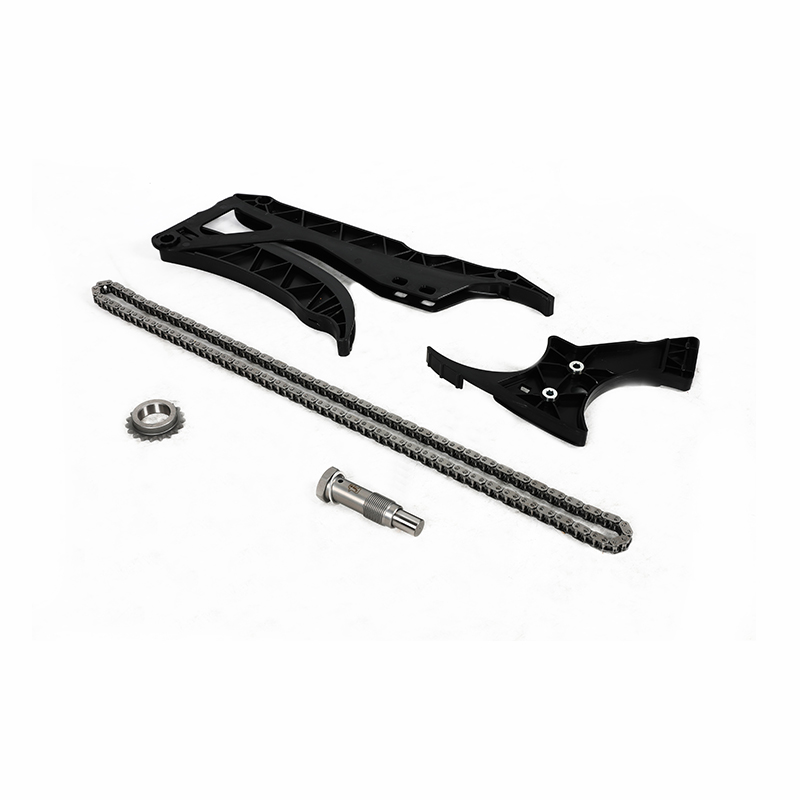
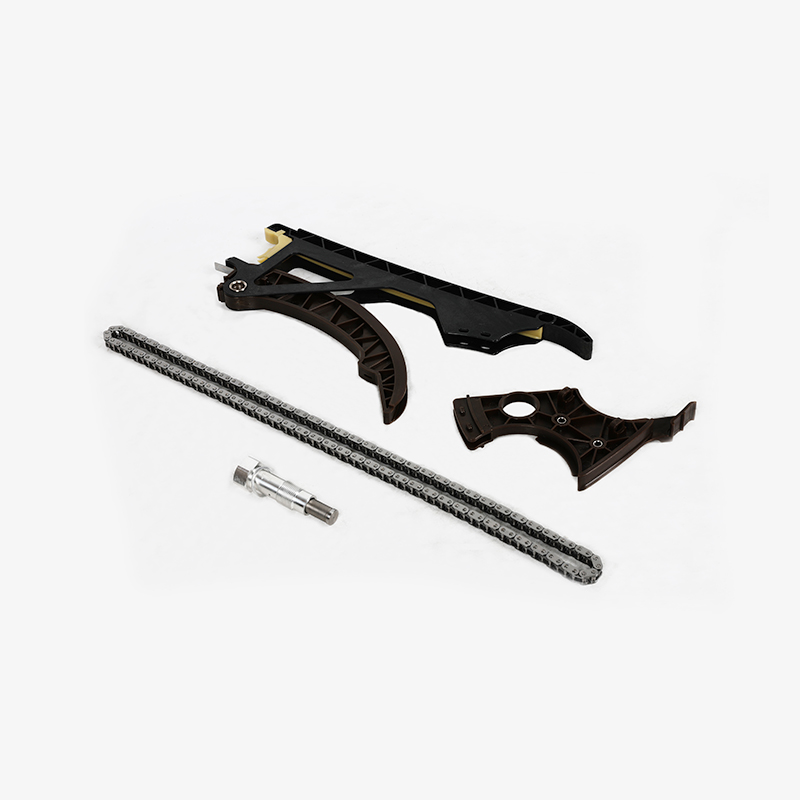
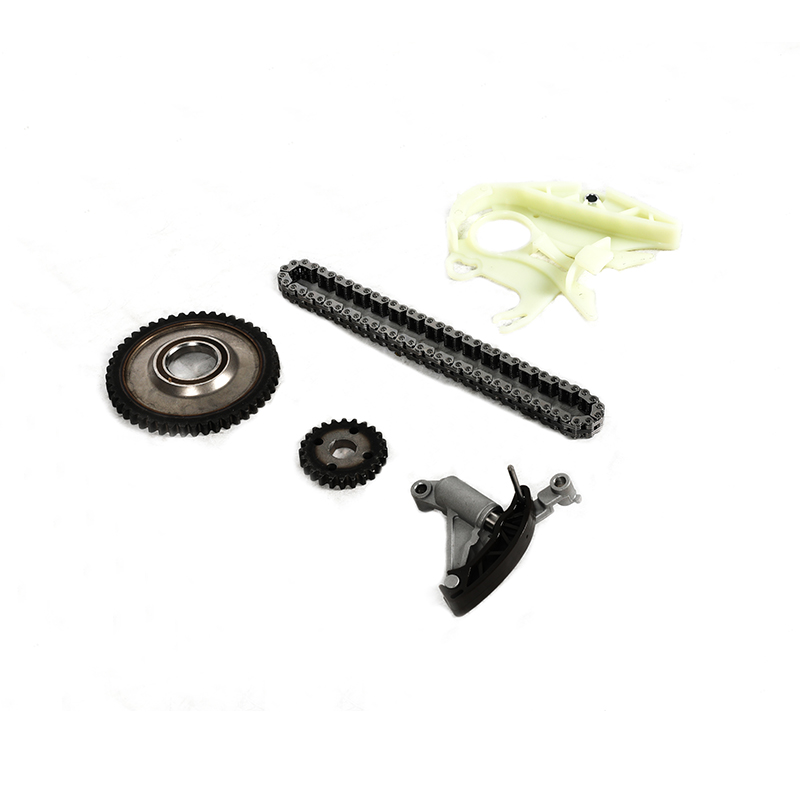
Huzhou Nanxun Jingtong Auto Parts Manufacturing Co., Ltd. produces all four components under one roof, which is why its timing chain kits are specified for wholesale buyers who want a single source for the complete assembly. When the chain, guide, and tensioner come from different factories, the procurement team inherits an interface risk that will only become visible after thousands of vehicles are on the road.
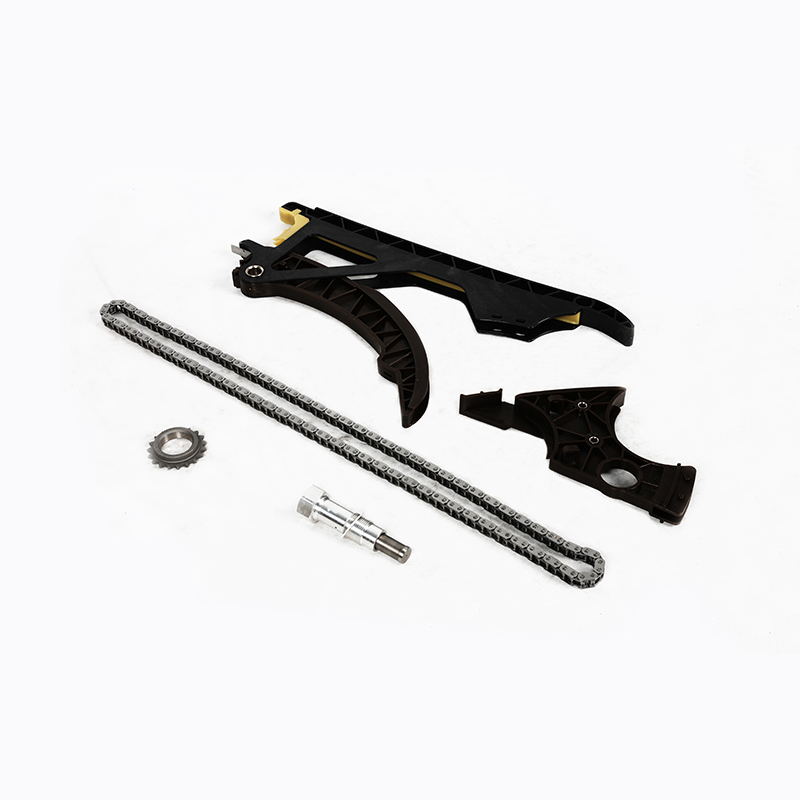
Complete Timing Chain Kit with Unified ProductionChoose a single-source timing chain kit from a manufacturer that produces chain, guide, and tensioner in-house. This approach minimizes interface risks and simplifies procurement for wholesale buyers.View Product →Standards, Testing, and the Audit Paper Trail
Testing records are the product. GB/T14212-2003 defines the performance indicators for automotive roller chains, while JB/T10348-200 sets the specification for chain tensioners. A qualified supplier provides tensile strength data, elongation reports, hardness logs, and salt-spray results on request, without being chased.
These documents are what an OEM quality team shows their own auditors. The supplier also keeps first-article inspection records for the specific timing chain kit that the buyer is sourcing. A factory that runs the full test matrix on every new production lot can provide these records without a special request. When an aftermarket-only offer is compared against an OEM standard, the deeper paper trail is the first visible difference.
Buyers who want to understand the practical gap between the two categories can compare OEM versus aftermarket timing chain kits.
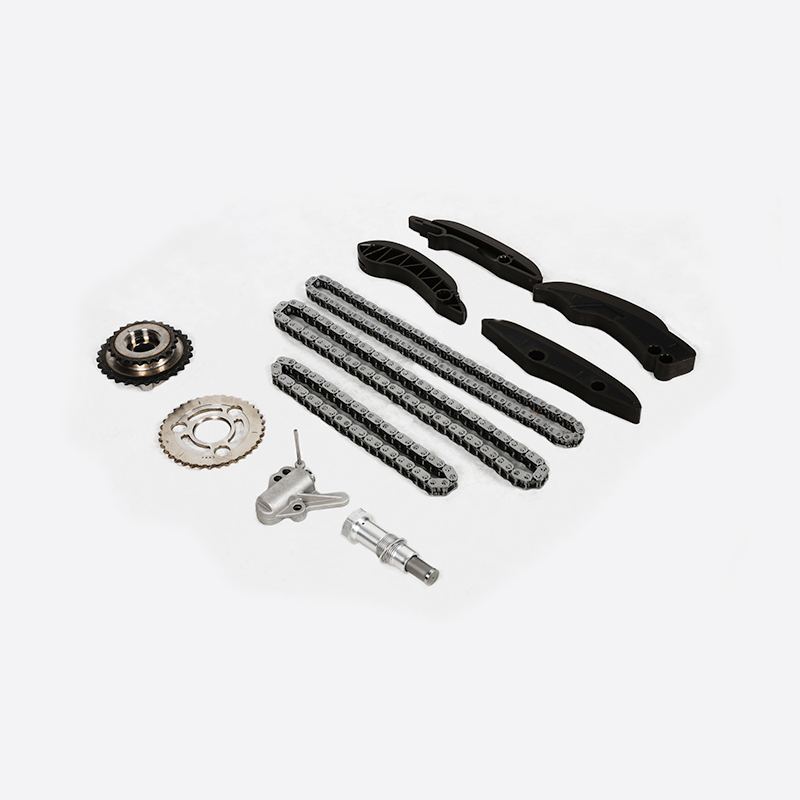
OEM-Grade Timing Chain Tensioner ManufacturingConsider a tensioner manufacturer with in-house production capabilities to handle peak orders and maintain process discipline, offering lower risk than trading companies relying on subcontractors.View Product →Supply Chain and Manufacturing Capacity
Capacity is part of the integrity proposition. A multi-year OEM program needs a supplier that can absorb peak orders without compromising process discipline. A company that owns its production sites has different risk exposure than a trading company that depends on subcontractors.
Tongxiang, Zhejiang, where Huzhou Nanxun Jingtong Auto Parts Manufacturing Co., Ltd. has its main operation, sits between Shanghai and Hangzhou. The location shortens the port-to-factory route for export containers heading to Europe, the Middle East, and Latin America. The company's export documentation and multilingual sales support, covering English, Russian, Arabic, and Spanish, also reduce the administrative friction that OEM importers typically encounter.
FAQ
What documents should an OEM buyer request before vetting a timing component supplier?
The mill certificate for the alloy steel, the heat treatment log for pins and sprockets, the elongation report for the chain, the tensioner force-curve data, and first-article inspection records. These five items screen out most unreliable candidates before a sample is shipped. If a supplier cannot provide a mill certificate for the base material it uses, the heat treatment logs on top of that material cannot be trusted either.
How do OEM and aftermarket timing components differ in their standards?
OEM programs require the full set of GB/T14212-2003 and JB/T10348-200 test reports plus statistical process control data. Aftermarket-only suppliers often skip the traceability documents that an OEM quality team needs for an audit. The difference is not whether the part is measured, but whether the measurement data reaches the buyer in a format that can be verified.
Why is a timing chain kit better than sourcing individual components?
A kit keeps the chain, guide, tensioner, and sprocket in one manufacturing family. The interface tolerances are matched at the design stage, which reduces cold-start noise, premature tensioner wear, and warranty exposure. Individual parts from different sources can fit in a repair bay, but they rarely agree under the full duty cycle.
What is the most common timing component failure mode that procurement teams should target?
Chain elongation caused by insufficient pin hardness. It pushes the tensioner to its travel limit, creates timing drift, and can cause a valve train collision. An elongation test on incoming material catches this early. The same risk appears when a buyer accepts a chain without a confirmed alloy grade and a documented hardness log.
 View More >>
 View More >>
 View More >>
 View More >>
 View More >>
 View More >>
 View More >>
 View More >>


