

 English
 русский
 عربى
 Español
Article Directory
When a replacement timing sprocket has the right tooth count but a bore machined one tolerance class wider than the factory specification, the first fit-up usually fails within seconds. A timing sprocket is a toothed wheel that meshes with the timing chain and transfers crankshaft motion to the camshaft; when the mesh is inaccurate, the whole drive wears out fast. Huzhou Nanxun Jingtong Auto Parts Manufacturing Co., Ltd. machines timing sprockets to GB/T 14212-2003 and JB/T 10348-200 process standards, and we evaluate every part with the criteria below before it goes into a rebuild.
Tooth Profile and Pitch Accuracy
Tooth profile and pitch accuracy decide whether the sprocket meshes with the chain at all, and pitch is the first measurement to verify. Most passenger-car engines use a 9.525 mm bushing chain pitch, but some families run 8 mm or 8.05 mm silent chain. A sprocket made for the wrong pitch looks almost identical, yet it produces immediate elongation, rattling, and fuel-trim codes.
- Flank form: the involute curve must match the chain roller geometry, or load is carried by one tooth instead of several.
- Root diameter: roller seating depends on the root circle; a wide root also increases impact load and chain stretch.
- Crowning: a slight crown on the tooth face keeps the chain centered; a dead-flat profile allows chain walk toward the guide rail.
Material, Heat Treatment, and Hardness
Material and heat treatment control the service life of a timing sprocket, and carburized alloy steel is the benchmark for high-duty positions. Induction-hardened medium carbon steel is acceptable for light-duty engines, while powder metal is used mainly for low-load applications and OEM cost pressure.
- 45 medium carbon steel: induction-hardened, cost-effective, good for universal and retrofit parts.
- 20CrMnTi alloy steel: carburized case, 55-60 HRC surface, for OEM-grade durability.
- Powder metal: quieter but lower strength, used in low-load engines.
Before you select a material, compare the heat treatment expectations against OEM drawing standards for the exact engine.
Bore Fit, Keyway, and Fastener Configuration
The bore and keyway decide how the sprocket transfers torque to the crankshaft or camshaft, and H7 bore tolerance with a DIN 6885 keyway is the baseline for an original-equipment replacement. A crankshaft sprocket sits on the crank nose; a camshaft sprocket locates on the camshaft journal or on the VVT rotor hub.
- Bore: H7 for a transition fit; H8 allows hammering, while H6 can crack the hub during press assembly.
- Keyway: width and depth must match DIN 6885; an over-wide keyway lets the key tilt under load.
- Fasteners: cam sprocket retainer bolt torque must follow the engine manual; VVT sprockets also seal against the oil control valve bore.
Detailed inspection sequences are described in our keyway and bore accuracy checks for Nissan timing sprockets.
Backlash and Chain Engagement
Backlash between chain and sprocket must stay between about 0.15 and 0.35 mm on a fresh set, because excessive free play converts into clatter and local edge wear. When a chain is elongated, the chain rides on the tooth tip instead of the root, and the sprocket flank shows a bright polished step.
| Measurement | Acceptable | Replace threshold |
| Chain-sprocket backlash | 0.15 to 0.35 mm | over 0.5 mm |
| Tooth flank wear | below 0.20 mm per flank | over 0.35 mm |
| Mounted radial runout | below 0.05 mm | over 0.10 mm |
| Chain elongation | below 1 percent | over 1.5 percent |
Healthy engagement
- Chain seats fully into the root with no visible topping.
- Rotation is quiet and uniform at cranking speed.
- No momentary slip when the crank is rocked back and forth.
Failing engagement
- Slap on cold start and a faint ratcheting sound at idle.
- A single bright flank step is visible on the load side of each tooth.
- Chain moves sideways on the crown when moved by hand.
Application Fit and Engine Platform
The engine platform is the deciding filter, because sprockets are matched to a specific crankshaft nose, keyway, chain pitch, and VVT rotor geometry. A Toyota K3Ve timing sprocket mounts on a VVT actuator with one oil feed pattern, while a Nissan YD25 crankshaft sprocket uses a different key geometry; same chain pitch does not mean the same sprocket.
VVT sprockets are not interchangeable
When the camshaft sprocket is part of a variable-valve-timing motor, the oil passages, rotor pin, and phaser torque curve must match. Installing a fixed sprocket on a VVT engine disables phasing and can risk piston-valve contact.
For a direct application match, start with the Toyota timing sprocket range, then confirm the bore and rotor spec against the engine code.
 Custom Toyota timing sprocket Suppliers, OEM Company - Huzhou Jingtong Auto PartAs China car engine Toyota timing sprocket suppliers and OEM car engine Toyota timing sprocket company, Huzhou Jingtong Auto Parts Manufa...View Product →
Quality Standards and Supplier Verification
Supplier capability is a selection factor before installation, because batch-to-batch quality determines whether sprockets meet dimensional and hardness claims. A reliable manufacturer publishes the standard it works to, requests a material certificate, and keeps batch records.
- Material: demand the steel grade and hardness report for each batch.
- Geometry: check bore, keyway, and runout; a first-article report prevents surprises.
- Traceability: the box should carry the article number, production date, and batch code.
The automotive timing sprocket catalog groups parts by brand and engine family.
Wholesale Timing Sprocket Manufacturers, OEM Factory - Huzhou Jingtong Auto PartHuzhou Jingtong Auto Parts Manufacturing Co., Ltd is China car engine Timing Sprocket manufacturers and OEM car engine Timing Sprocket fa...View Product →
For generic applications, the universal timing sprocket line is usable only when the bore and keyway have been verified against the part being replaced.
Custom Universal timing sprocket Suppliers, OEM Company - Huzhou Jingtong Auto PAs China car engine Universal timing sprocket suppliers and OEM car engine Universal timing sprocket company, Huzhou Jingtong Auto Parts ...View Product →
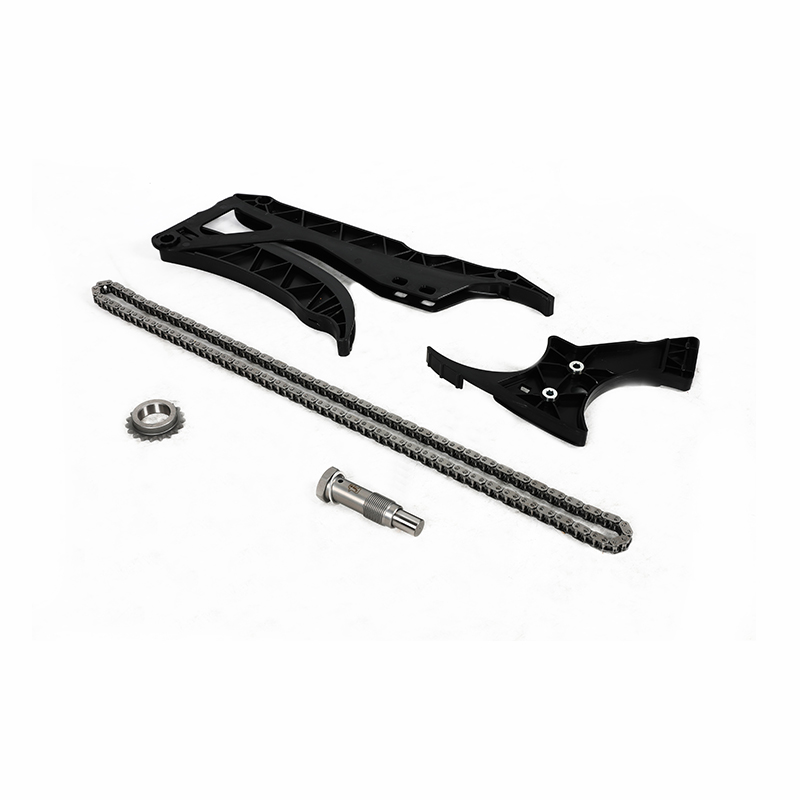
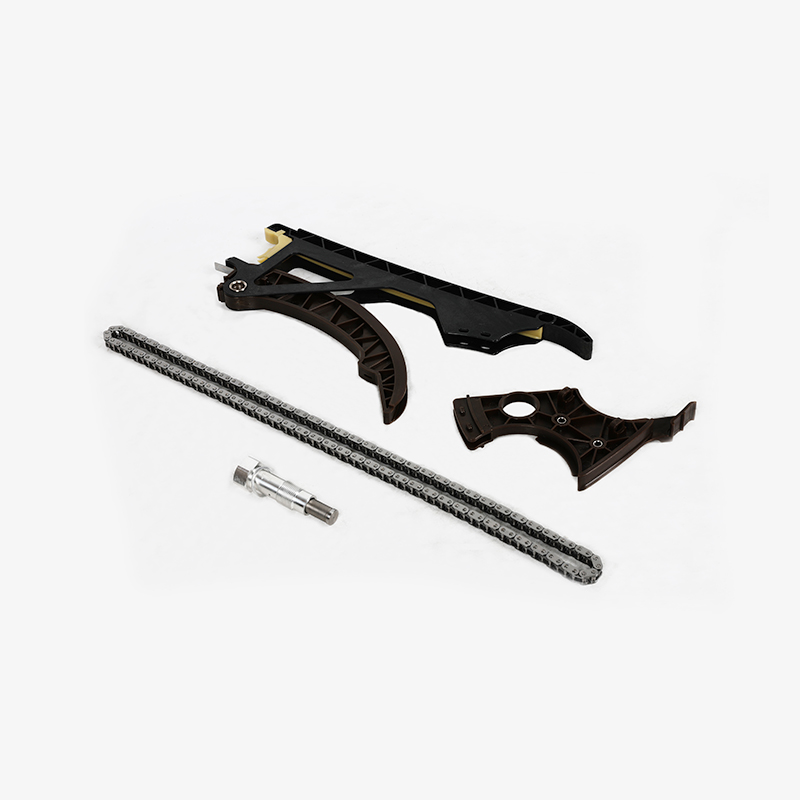
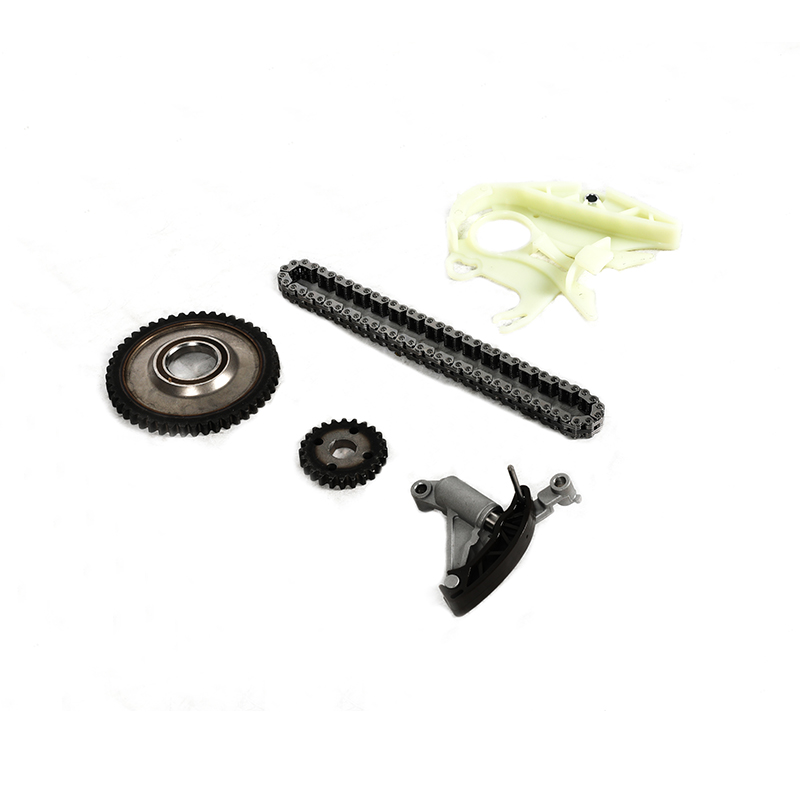
Because the same production line also makes timing chains, guides, tensioners, and complete kits, the sprocket can be matched against the chain and tensioner from the same source.
Failure patterns across many rebuilds are collected in the crankshaft timing sprocket guide.
Frequently Asked Questions
Selecting a timing sprocket means matching tooth geometry, material, bore fit, and supplier quality; the questions below cover the decisions that most buyers check first.
How much does tooth count matter when selecting a timing sprocket?
Tooth count is fixed by the engine design. A 21-tooth crankshaft sprocket and a 42-tooth camshaft sprocket create a 2:1 ratio, and changing it requires ECU recalibration. For a replacement, always match the original count.
Can a timing sprocket be reused after a chain replacement?
Yes, only if backlash and flank wear remain within the new-part thresholds in the table above. Replacing the sprockets with a new chain is the safer choice because chain wear accelerates sprocket wear.
Are powder metal sprockets as durable as forged or machined steel sprockets?
No. Powder metal typically reaches about 34-40 HRC, while carburized 20CrMnTi reaches 55-60 HRC on the case. For high-mileage diesel and turbo engines, alloy steel is the correct material.
What is the most common sprocket failure after a timing chain rebuild?
Bore and keyway mismatch. A bore 0.02 mm too large can be pressed on with sealer, but a bore 0.05 mm too large rocks on the crank nose and destroys the key within roughly 1,000 km.
 View More >>
 View More >>
 View More >>
 View More >>
 View More >>
 View More >>
 View More >>
 View More >>


