

 English
 русский
 عربى
 Español
Article Directory
- 1 What is changing in timing sprocket manufacturing
- 2 Powder metallurgy is becoming a mainstream sprocket process
- 3 Tighter precision demands on bore, keyway, and backlash
- 4 Heat treatment moves toward vacuum carburizing
- 5 Hybrid powertrains are rewriting sprocket duty cycles
- 6 What buyers should demand from a sprocket supplier
- 7 Timing sprocket manufacturing questions buyers keep asking
Aftermarket buyers and engine builders have long treated the timing sprocket as a fixed commodity: a toothed steel wheel, machined to print, swapped whenever the chain skips. That assumption is breaking down. Between 2023 and 2026, new sprocket programs for light vehicles moved decisively toward powder metallurgy, vacuum carburizing, and sprocket assemblies built for hybrid stop-start operation. Replacement buyers are inheriting those changes, and suppliers that cannot hold the new tolerances are being removed from purchase lists.
Core definition: a timing sprocket is the toothed wheel that transfers crankshaft rotation to the camshaft through the timing chain. Its tooth-flank profile, bore accuracy, and case hardness decide how much timing variation the valvetrain experiences under load.
What is changing in timing sprocket manufacturing
The near-term answer is that the industry is converging on three targets: lower total cost at volume, tighter dimensional control, and fatigue life matched to hybrid duty cycles.
These targets show up in engineering decisions, not marketing claims. Sprocket programs that used to be released with a machined-steel print are now reviewed against sintered alternatives. Heat treatment schedules are being recalculated around distortion limits. Measurement rooms are replacing manual go/no-go fixtures with optical tooth-form gauges, and the parts themselves are increasingly sourced as part of a timing chain kit rather than as single items.
Tolerance is the real product. A sprocket that measures within print but carries a worn keyway or an out-of-round bore will produce the same timing-chain noise as a failed tensioner, and it accelerates chain wear by concentrating load on individual link plates.
Powder metallurgy is becoming a mainstream sprocket process
Powder metallurgy wins for camshaft sprockets, while forged or machined alloy steel still wins for crankshaft sprockets that carry higher torque and bending loads.
The dividing line is mechanical duty. A camshaft sprocket transmits a fraction of crankshaft torque and fails by flank wear more often than by tooth fracture, which fits the porosity limits of a sintered part. A crankshaft sprocket sits on the full output of the chain drive and must absorb start-up shock, so dense steel with a deep case remains the safer choice.
| Attribute | PM sintered sprocket | Machined alloy steel sprocket |
| Relative density | 6.8 to 7.2 g/cm3 | 7.8 g/cm3 |
| Tooth-form precision | Near net shape, about 0.03 mm | Ground profile, about 0.01 mm |
| Fatigue strength | Adequate for camshaft drives | Highest, with deep case depth |
| Cost at high volume | Lower, minimal machining | Higher, full profile machining |
| Typical position | Camshaft sprockets in high-volume engines | Crankshaft sprockets, diesel, high performance |
Which process wins is decided by the sprocket's position in the drive, not the price per kilogram. Our comparison of powder metallurgy versus steel timing sprockets explains where sintered parts still fall short on impact and fatigue.
Tighter precision demands on bore, keyway, and backlash
Precision in a timing sprocket means three measurable numbers: bore fit, keyway position, and tooth-spacing error, and a buyer should ask for all three in writing.
Bore fit is usually specified as H7 or H8 on the crankshaft side, where a loose fit lets the sprocket wobble before the keyway takes load. Keyway position matters because off-angle machining shifts valve events by a fixed amount from the moment of installation. Tooth-spacing error is the quieter problem: a chain sees it as repeated pitch variation and wears unevenly across its length.
- Bore tolerance within the H7 range on machined steel sprockets.
- Keyway width and angular position held to the drawing on the same setup.
- Backlash between chain and sprocket kept between 0.05 and 0.15 mm on a new assembly.
A single skipped tooth at a 36-tooth camshaft sprocket shifts valve events by roughly 10 degrees of crankshaft rotation, enough to move peak torque by several hundred rpm. The keyway is the component that usually sends rejected sprockets to scrap: a worn or off-position keyway changes cam timing instantly and cannot be repaired by the installer.
The most common field failure is written in the keyway, not the tooth flank. Our technical guide on Nissan timing sprocket keyway, bore accuracy, and backlash walks through the exact measurements to take before approving a supplier.
Heat treatment moves toward vacuum carburizing
Low-pressure vacuum carburizing is displacing atmosphere carburizing in sprocket lines because it reduces distortion and removes the risk of internal oxidation at the tooth root.
Atmosphere furnaces remain common because they process large batches cheaply, but they leave a thin oxide layer that can act as a stress raiser on loaded tooth flanks. Vacuum carburizing heats parts in a controlled chamber and introduces carbon as a gas, which produces a cleaner case and a more uniform depth across complex forms such as a sprocket with a keyway and undercut.
Atmosphere carburizing
- Lowest cost per batch at large volume
- Higher distortion on thin-walled sprockets
- Oxide formation at the tooth root is hard to avoid
- Case depth can vary between load positions
Vacuum carburizing
- Lower distortion, tighter tooth-spacing results
- Clean case with consistent depth on complex parts
- Higher cost per part, justified on precision programs
- Better repeatability for first-article approval
Chinese sprocket and chain suppliers commonly certify chain dimensions to GB/T14212-2003. Buyers should also request a hardness report with case depth and core hardness for the same lot number, because a generic material certificate does not prove that a specific batch was carburized to depth.
Hybrid powertrains are rewriting sprocket duty cycles
Hybrid stop-start operation changes sprocket duty from steady rotation to rapid torque reversals, so tooth flanks and phaser interfaces are being redesigned for impact fatigue.
A conventional engine accumulates wear over long, relatively smooth running periods. A hybrid electric vehicle shuts the engine down and restarts it dozens of times per trip, and every restart hits the timing drive with a torque spike while oil pressure is still building. The result is a duty cycle dominated by transient loads, which punishes sprockets with shallow cases and parts with weak keyway fillets.
Estimated share of new combustion-engine builds with start-stop or hybrid timing drives
Projection compiled from global light-vehicle platform plans, mid-2026.
Sprocket life in these engines is measured in start cycles as much as kilometers. Our outlook on the future development of timing chains in automotive engines covers how chain pitch, sprocket tooth form, and phaser control will shift as electrification deepens.
What buyers should demand from a sprocket supplier
Buyers evaluating sprocket suppliers should verify four capabilities: material traceability, in-house heat treatment, tooth-form gauging, and development from drawings or samples.
Huzhou Nanxun Jingtong Auto Parts Manufacturing Co., Ltd. is organized around those requirements. The company, which operates as a 100 percent manufacturer with two owned plants, 12,000 square meters of combined floor space, and an annual capacity above 2,000,000 pieces, documents its timing sprocket range across Toyota, Nissan, BMW, Chery, and universal applications so replacements can be matched to the original drive instead of forced into a generic pitch.
 Wholesale Timing Sprocket Manufacturers, OEM Factory - Huzhou Jingtong Auto PartHuzhou Jingtong Auto Parts Manufacturing Co., Ltd is China car engine Timing Sprocket manufacturers and OEM car engine Timing Sprocket fa...View Product →
- Confirm that the supplier owns the heat-treatment line and can issue case-depth data per lot.
- Request first-article reports for bore, keyway, and tooth-spacing, not a single overall diameter.
- Check the standard used; chain dimensions normally reference GB/T14212-2003.
- Ask whether the supplier can develop from your drawing or an original sample. That is the difference between a manufacturer and a reseller.
A direct manufacturer is also easier to audit: material certificates, furnace records, and gauge reports come from the same facility that machined the part, not from a trading office.
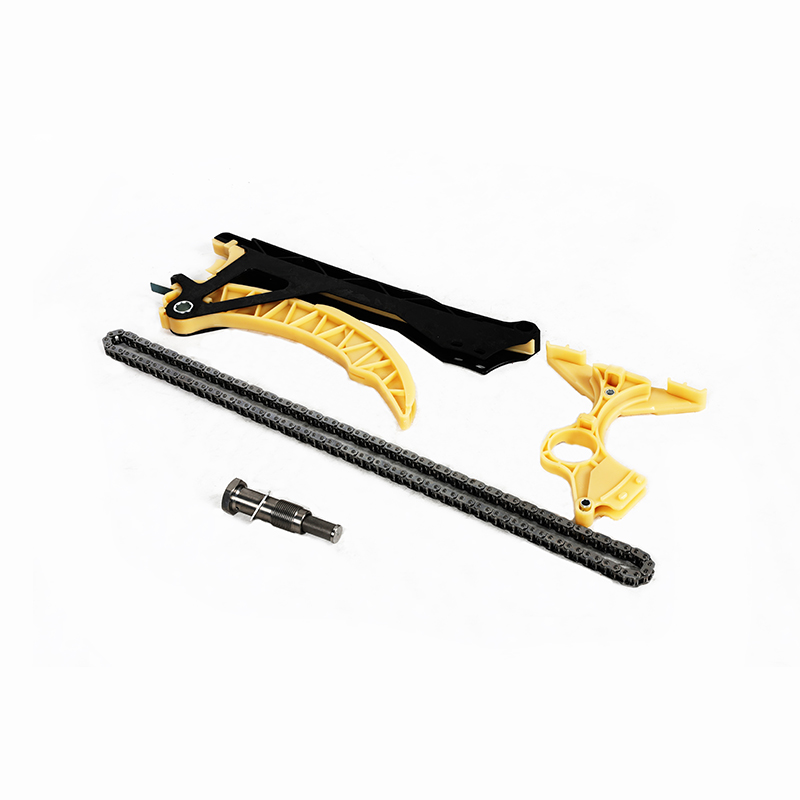
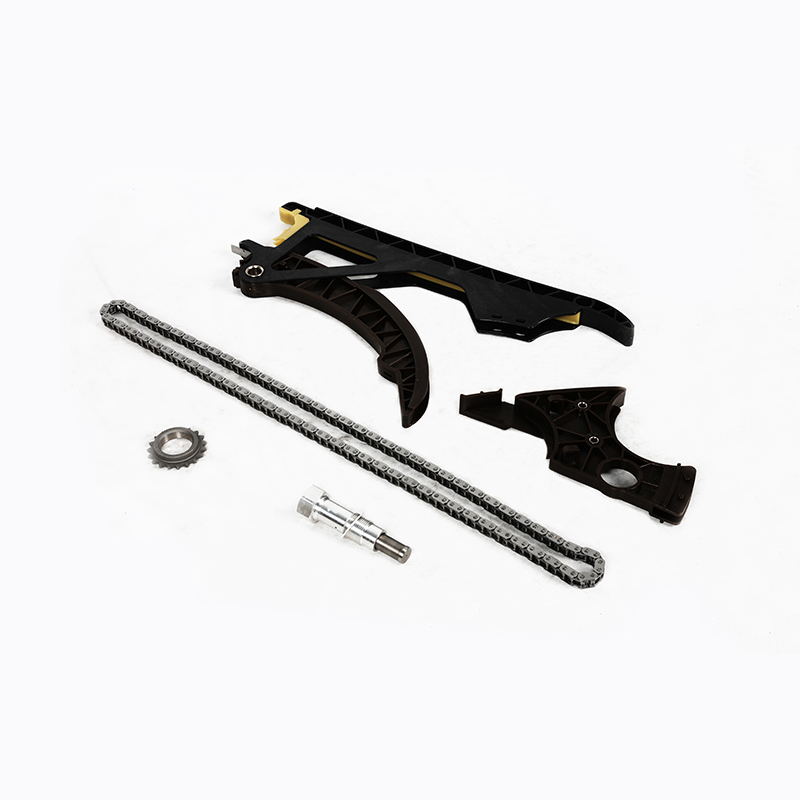
The same manufacturing base feeds the timing chain kit catalog, which bundles chains, sprockets, guides, and tensioners for engines such as the Nissan YD25, the Ford 3.5 and 4.0, and the BMW N14, N20, and N26 families so the full drive arrives with matched components.
Wholesale Car Engine Timing Chain Kit Manufacturers, FactoryHuzhou Jingtong Auto Parts Manufacturing Co., Ltd is China car engine timing chain kit manufacturers and OEM car engine timing chain kit ...View Product →
For engines with variable timing, the VVT phase regulator lineup covers cam phaser units for Audi, BMW, Ford, GM, Honda, Hyundai, Porsche, and Toyota. That coverage matters because a worn phaser produces the same noise and timing symptoms as a stretched chain, and diagnosing the wrong part doubles labor cost.
Wholesale Camshaft Phase Regulater(VVT) Manufacturers, OEM Factory - Huzhou JingHuzhou Jingtong Auto Parts Manufacturing Co., Ltd is China car engine Camshaft Phase Regulater(VVT) manufacturers and OEM car engine Cams...View Product →Timing sprocket manufacturing questions buyers keep asking
Will timing sprockets disappear as the industry shifts to electric vehicles?
No. Pure battery EVs eliminate the camshaft, but hybrids, range extenders, and plug-in vehicles still use combustion engines, and every one of those engines carries at least two timing sprockets. Industry projections put hybrid and start-stop powertrains on the majority of new light-vehicle builds well past 2030.
When should the sprocket be replaced together with the timing chain?
Replace the sprockets whenever the chain is replaced and the drive has covered its service interval. Sprocket wear and chain elongation reinforce each other; installing a new chain on worn sprockets causes rapid pitch wear and early return visits for tensioner noise.
How do buyers verify sprocket heat treatment quality?
Request a hardness report with case depth and core hardness for the same production lot, confirm the base material certificate, and check the sprocket against the drawing or a standard such as GB/T14212-2003 before approving first articles.
What separates OEM and aftermarket sprocket quality?
OEM sprockets are built to the automaker drawing with fixed tolerances and measured tooth form. Aftermarket sprockets can match that quality when the supplier runs in-house machining and heat treatment; the risk is limited to suppliers who never measure keyway position or tooth spacing.
The takeaway: the timing sprocket is becoming a measured, system-integrated component. Buyers who insist on bore and keyway data, documented case depth, and matched kits will capture most of the reliability gain that the new manufacturing trends promise.
 View More >>
 View More >>
 View More >>
 View More >>
 View More >>
 View More >>
 View More >>
 View More >>


