

 English
 русский
 عربى
 Español
Article Directory
A warranty return landed on our desk earlier this year: five timing sprockets from a single batch, all back within 20,000 km. The teeth looked normal to the naked eye, but under a magnifier the drive-side flanks were peened over like a hammered nail head. The chain had started to climb the teeth, and one engine had already skipped timing. Every one of those sprockets failed the same hardness check that our production line runs on every batch before packing.
That is the practical answer to how to test timing sprocket quality: you check the properties that decide whether a sprocket can hold the chain at a fixed phase under load for hundreds of thousands of cycles. Those properties are material and heat treatment, tooth profile, bore and keyway accuracy, surface finish, and chain seating. A sprocket that passes these checks runs quietly and wears evenly. A sprocket that fails any one of them fails the engine eventually, so the only sensible time to catch it is before it goes behind the timing cover.
What a Timing Sprocket Has to Get Right
The sprocket is the mechanical interface between the chain and the crankshaft or camshaft. Its teeth transfer the load, its bore fixes it to the shaft, and its keyway locks in the phase. Most early failures trace back to one of three things: the tooth profile, the bore and keyway, or the heat treatment.
Tooth Profile and Pitch Accuracy
Chain rollers seat in the tooth spaces, and the tooth flanks carry the driving load. The spacing between teeth has to match the chain pitch precisely. If the pitch is too wide, the sprocket moves ahead of the chain under load and lets the rollers crash into the flanks; if it is too narrow, the chain sits high and hammers the tooth tips. Both conditions produce noise, timing scatter, and eventually chain skip. This is why a sprocket should always be evaluated together with the chain it will run with rather than on its own.
Bore and Keyway Accuracy
The bore decides how the sprocket sits on the shaft. A bore that is a few microns oversize lets the sprocket wobble, so the chain tension pulses every revolution and the tensioner keeps correcting. The keyway is just as critical: if it is broached off-center, the sprocket locks onto the shaft at the wrong phase and the valve timing is wrong from the first startup. These defects are invisible in a photograph and very common in cheap aftermarket parts. Our technicians have documented the same pattern of keyway, bore, and backlash failures on imported sprockets for years.
Heat Treatment and Surface Hardness
Material grade and heat treatment decide how long the tooth flanks hold their shape. We manufacture timing sprockets from high-carbon chromium-alloy steel and harden them within a defined surface range. A Rockwell hardness test tells you more about a sprocket in two minutes than visual inspection can in an hour. If the hardness is too low, the flanks deform under load, the effective pitch grows, and the chain starts climbing. If the hardness is too high and the structure brittle, teeth chip under impact. The difference between a sprocket that survives 200,000 km and one that fails at 20,000 km usually comes down to this step, and the same relationship is described in detail in our notes on OEM standards and heat-treatment requirements for engine timing sprockets.
Practical Ways to Test a Timing Sprocket
A distributor or a machine shop does not need laboratory equipment to catch the defects that cause premature failures. A bore gauge, a dial indicator, a small hardness tester, and one section of known-good chain cover most of the risk.
The Inspection Checklist That Catches Most Rejects
The table below summarizes the checks we apply to incoming samples and production batches at our plant.
| Check | Tool | Acceptable Result |
|---|---|---|
| Tooth flank condition | Magnifying glass or 5x loupe | No peening, pitting, or rolled edges; contact marks even across the flank |
| Bore diameter | Bore gauge or inside micrometer | Within the specified tolerance class, typically H7 |
| Keyway width and position | Pin gauge and reference from teeth | No visible deformation; keyway centered relative to tooth position |
| Runout | Dial indicator with V-blocks | Total indicated runout below 0.05 mm |
| Surface hardness | Rockwell hardness tester | Matches the supplier's declared range within ±2 HRC |
| Chain seating | One wrapped length of new chain | Rollers seat fully in every tooth space; no climbing or clicking |
Apply the Ten-Percent Wear Rule
For a sprocket already in service, chain engineers use a simple end-of-life rule: when the depth of wear on the tooth reaches 10 percent of the tooth thickness, the sprocket must be replaced. Worn teeth change the effective pitch and make the chain climb. The same logic works on incoming parts. Place a sample next to a master sprocket of known good geometry and compare tooth thickness. If the teeth on the new part are already thinner than the master, the machining or the heat treatment is wrong. The mechanics of this failure are also explained in our article on how and where timing sprockets wear in service.
Do a Real Fitment Test
Do not trust a spec sheet alone. Wrap the actual chain you intend to sell around the sprocket and rotate it slowly by hand. The rollers should seat fully in every tooth space, and the wrap should be smooth, with no clicking as each roller enters. Then mount the sprocket on a shaft and feel for play. A quality part feels solid. A marginal part feels almost right, and almost right is the most expensive category of part in the timing business.
What to Verify With the Supplier
Component testing only shows you the sample you hold. The purchasing decision depends on whether the supplier can reproduce that sample at scale, so three verification points matter.
Standards and Traceability
We manufacture timing system components to GB/T 14212-2003 and JB/T 10348, and our testing is run against those same documents. A supplier that cannot name the standard behind its sprockets is usually a supplier that never tests them. Ask for material certificates, hardness records, and a sample from every production batch. If the records do not exist, the risk is sitting on your shelf.
Consistency Across Batches
One good sample proves nothing. The real question is whether the thousandth piece matches the first, which depends on tooling maintenance, incoming steel control, and heat-treatment consistency. The cheapest insurance for a bulk buyer is a sample check from each carton and a hardness test on a few pieces from different positions in the batch.
The Replacement-Set Trap
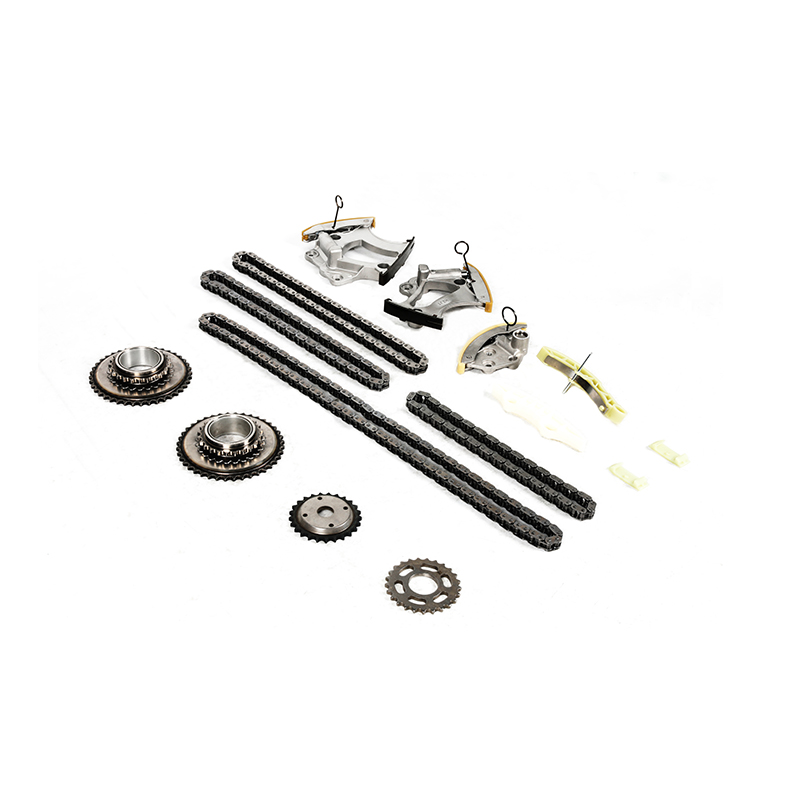
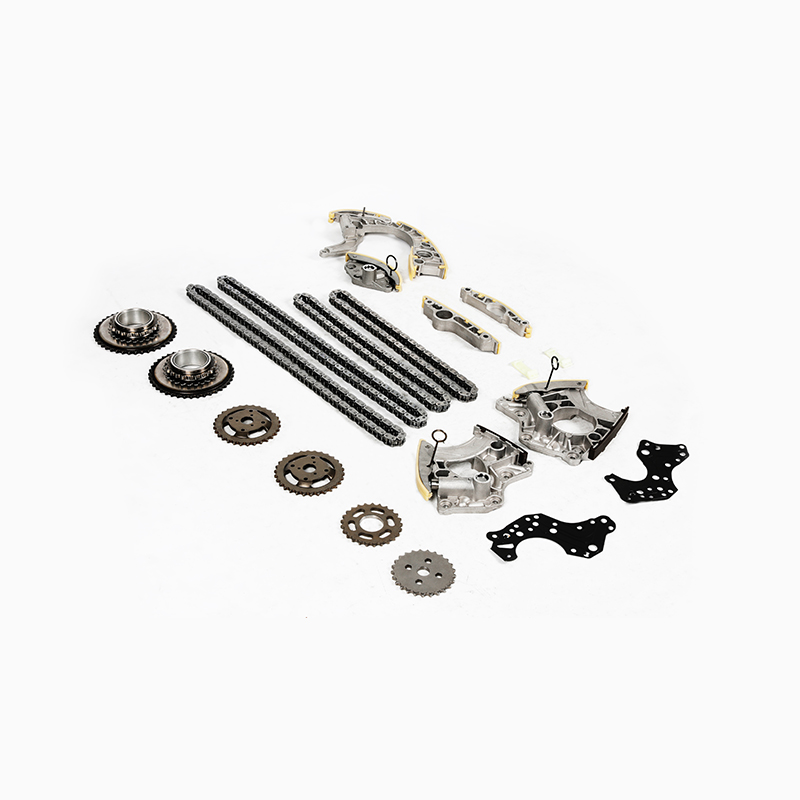
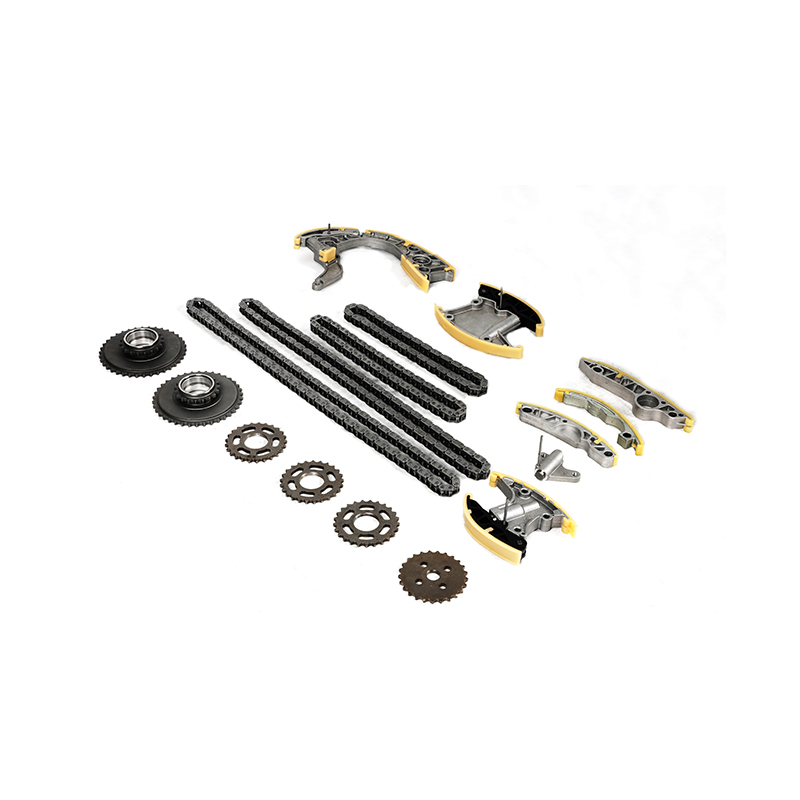
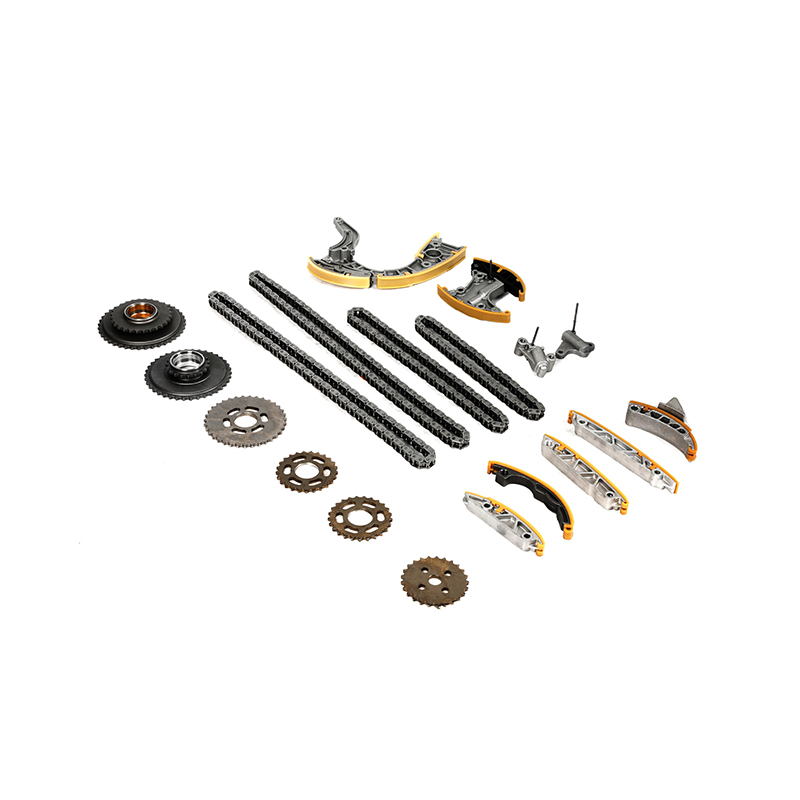
When a sprocket wears out, the chain has worn with it. Fitting a new sprocket to a used chain makes the new part wear fast and leaves the old chain as the weak link. Experienced workshops replace the sprocket together with the chain, and wherever the engine design requires it, the guides and the tensioner. For this reason a complete timing chain kit is often the practical option when inspection shows the whole drive has worn together.
 Wholesale Car Engine Timing Chain Kit Manufacturers, FactoryHuzhou Jingtong Auto Parts Manufacturing Co., Ltd is China car engine timing chain kit manufacturers and OEM car engine timing chain kit ...View Product →
How to Use These Tests When You Buy
Put together, these checks form a short decision sequence:
- Verify the dimensions: bore, keyway, runout, and tooth thickness against a known-good reference.
- Verify the hardness: one Rockwell reading per sample, and compare it with the supplier's declared range.
- Verify the interaction: wrap a new chain around the sprocket and confirm smooth seating.
- Verify the batch: repeat the quick checks on samples from separate cartons and keep the records for future claims.
A supplier that passes all four steps will deliver sprockets that fit, phase correctly, and wear evenly. The failures we see in the market almost never start with the chain; they start with a sprocket that was never measured.
Before you commit to a sourcing decision, confirm that the supplier can cover your actual applications. Our timing sprocket range covers the main vehicle brands with the same machining and heat-treatment checks applied to every batch, and our universal timing sprocket category serves general replacement demand across engine families. With two manufacturing facilities and an annual capacity of over two million pieces, we put the checks described above at the gate between production and packing, not just on the inspection sheet.
Custom Universal timing sprocket Suppliers, OEM Company - Huzhou Jingtong Auto PAs China car engine Universal timing sprocket suppliers and OEM car engine Universal timing sprocket company, Huzhou Jingtong Auto Parts ...View Product →Wholesale Timing Sprocket Manufacturers, OEM Factory - Huzhou Jingtong Auto PartHuzhou Jingtong Auto Parts Manufacturing Co., Ltd is China car engine Timing Sprocket manufacturers and OEM car engine Timing Sprocket fa...View Product → View More >>
 View More >>
 View More >>
 View More >>
 View More >>
 View More >>
 View More >>
 View More >>


