

 English
 русский
 عربى
 Español
Article Directory
A freshly machined timing sprocket does not reveal its quality by appearance alone. Two sprockets can share the same tooth count and outer diameter, yet one may run quietly for 150,000 km while the other develops a cold-start rattle, triggers a camshaft-correlation code such as P0016, and forces the customer to redo the entire timing job. The difference comes down to five decisions made before the part is installed: material selection, heat treatment, tooth and bore accuracy, surface finish, and batch consistency. A timing sprocket is a precision wear part, not a commodity casting.
What a Timing Sprocket Must Do in the Engine
In a chain-driven engine, the crankshaft sprocket transfers rotation to the timing chain, and the camshaft sprocket drives the camshaft in the same synchronized motion. Together they determine when the intake and exhaust valves open and close relative to piston position. Even a single tooth of error on the sprocket shifts valve timing visibly and reduces engine output.
Under normal operation the sprocket carries cyclic torque loads, absorbs tension spikes during cold starts, and runs in an oil environment that is often hot and contaminated. To survive this, the sprocket needs the right combination of surface hardness, core toughness, and dimensional precision. When a sprocket is poorly made, the chain begins to climb the tooth flank, timing drifts, the engine idles roughly, and in an interference engine the result can be piston-to-valve contact.
Material and Heat Treatment Define the Foundation
The base material determines what heat treatment can achieve. High-quality timing sprockets are typically machined from carbon steel with chromium added to improve hardenability and surface wear resistance. Chromium also helps the tooth flank resist pitting under repeated contact with the chain rollers. This is why manufacturers that supply sprockets for demanding aftermarket applications use high-carbon chromium alloy steel rather than mild steel.
Why Steel Grade Matters
If the steel has insufficient carbon, carburizing or induction hardening creates only a shallow, soft case. The tooth tips round off quickly, the chain pitch no longer matches the sprocket, and wear accelerates on both components. A stable steel grade is the prerequisite for a consistent hardened layer. Products manufactured in line with standards such as GB/T14212-2003 and JB/T10348-200 are controlled against a defined material and inspection baseline, which matters when you source in volume.
For a deeper look at how material and hardening influence sprocket life, review what OEM sprocket standards say about material and heat treatment.
What Heat Treatment Actually Controls
Heat treatment balances surface hardness against core toughness. A timing sprocket flank normally needs surface hardness in the 45 to 55 HRC range to withstand wear from chain rollers, while the core keeps enough ductility to absorb shock loads. Over-hardened teeth chip; under-hardened teeth wear into hook shapes in a fraction of the expected service life. Reliable makers verify hardness on samples from each batch before the sprockets are cleaned and packaged. Our timing sprocket product range follows this logic: material is selected for the application, treated for wear, and checked against drawing requirements.
 Wholesale Timing Sprocket Manufacturers, OEM Factory - Huzhou Jingtong Auto PartHuzhou Jingtong Auto Parts Manufacturing Co., Ltd is China car engine Timing Sprocket manufacturers and OEM car engine Timing Sprocket fa...View Product →
Tooth Profile, Bore Fit, and Keyway Accuracy
Material and heat treatment give the sprocket durability, but machining accuracy gives it timing precision. A sprocket can have excellent steel and still fail if the tooth form or bore is off. The machining step decides how quietly the chain runs and how long the valve timing stays correct.
Tooth Profile and Chain Pitch
The tooth space must match the chain roller diameter and pitch. If the profile is too open, the rollers move laterally and generate clicking; if it is too narrow, the chain wedges and drags. In both cases, load distribution across the tooth flanks becomes uneven, and a small profile error repeated around the circumference is enough to produce cyclic tension fluctuations that accelerate chain elongation.
Bore, Keyway, and Timing Position
The bore controls the fit on the crankshaft or camshaft. A sprocket with an oversize or out-of-round bore can creep under load, scoring the shaft and eventually losing synchronization. The keyway performs two jobs: it transmits torque and fixes the angular position of the sprocket. A keyway machined a few degrees off its nominal position retards or advances the cam timing from the very first installation, causing the engine to run poorly even though every other part is new. Chain backlash should also be checked; excessive backlash between the chain and sprocket teeth produces rattling and impact loading that wears both parts. The same logic applies whether the part is an original-equivalent fitment or a universal aftermarket part, because the tooth and bore geometry are defined by the engine, not by the brand on the box.
| Checkpoint | What it controls | What happens if out of specification |
|---|---|---|
| Tooth profile and pitch | Chain seating and load distribution | Clicking, chain skip, fast chain wear |
| Bore diameter and roundness | Press fit on crankshaft or camshaft | Slippage, fretting, shaft scoring |
| Keyway width and angle | Torque transfer and cam timing reference | Retarded or advanced timing, diagnostic trouble codes |
| Chain backlash | Stability of the chain-sprocket mesh | Rattling, impact loading, premature fatigue |
When replacing a sprocket for a specific engine family, the bore and keyway must be verified against the original gearset specification. Our universal timing sprocket replacements are machined from the same drawings and controlled tolerances as application-specific parts.
Custom Universal timing sprocket Suppliers, OEM Company - Huzhou Jingtong Auto PAs China car engine Universal timing sprocket suppliers and OEM car engine Universal timing sprocket company, Huzhou Jingtong Auto Parts ...View Product →
More detail on several of these effects is covered in how keyway, bore, and backlash tolerances affect timing chain reliability.
Surface Finish and Wear Resistance
Hardness alone does not determine wear performance. The surface finish of the tooth flanks controls how the chain rollers seat and how the oil film behaves during the running-in period. Rough machining marks act as stress raisers; small burrs at the tooth edges can damage rollers and create noise. A high-quality sprocket has clean, consistent flanks with no visible tool marks and no sharp edges at the tooth tips.
The wear pattern to look for on a used sprocket is hooking: the load flank becomes concave and the chain sits higher on the tooth. Once hooking starts, the effective pitch of the sprocket no longer matches the chain, and wear accelerates rapidly. A correctly hardened and finished sprocket delays this process until the chain itself reaches the end of its service life.
Batch Consistency and Supplier Verification
For buyers who order sprockets by the hundred or thousand, the danger is not a single defective part; it is variation between batches. A perfect first-article sample means nothing if the next production run uses different steel, different hardening parameters, or different tooling.
Before placing a volume order, a prudent buyer should request:
- A material certificate confirming the steel grade used for the batch
- A hardness test report covering both the tooth flank and the core
- A dimensional measurement report for tooth profile, bore, and keyway position
- The production standard applied, such as GB/T14212-2003 or the equivalent specification
- Batch traceability from incoming steel to finished, packaged sprockets
We manufacture timing chain components directly in our own plants, with two manufacturing bases and an annual capacity above two million parts. That direct control is what allows us to answer these questions with documented records rather than estimates.
Sprocket and Chain Work as a Set
Worn sprockets and new chains do not mix. When a chain has stretched enough to skip, the sprocket teeth have usually developed a matching wear pattern. A new chain running on the worn sprocket wears quickly because the tooth flank no longer matches the chain pitch, and the repair fails long before it should. For this reason, most professional engine workshops replace sprockets, tensioners, and guides at the same time as the timing chain.
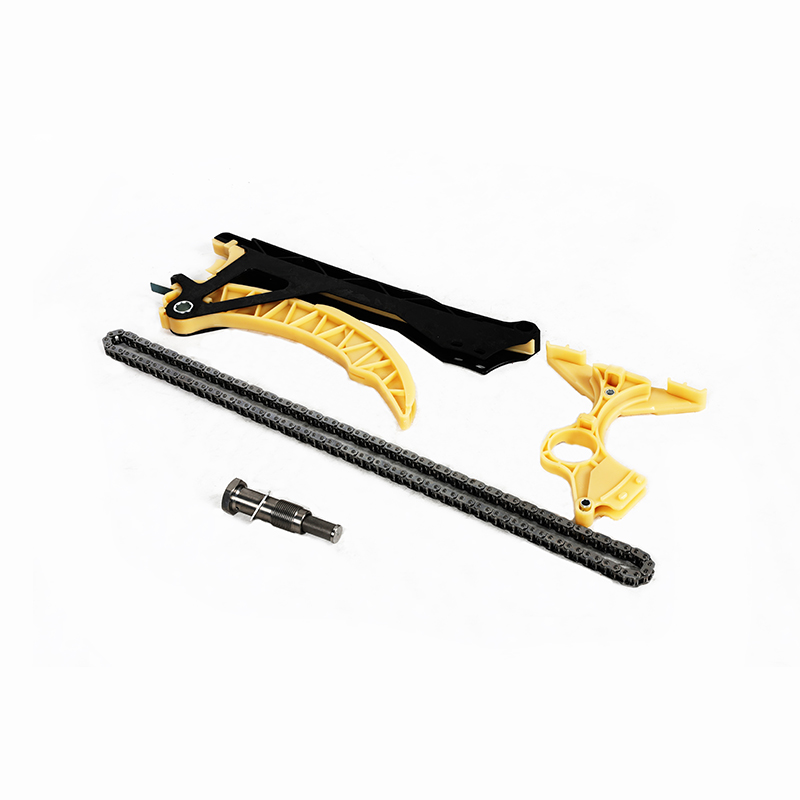
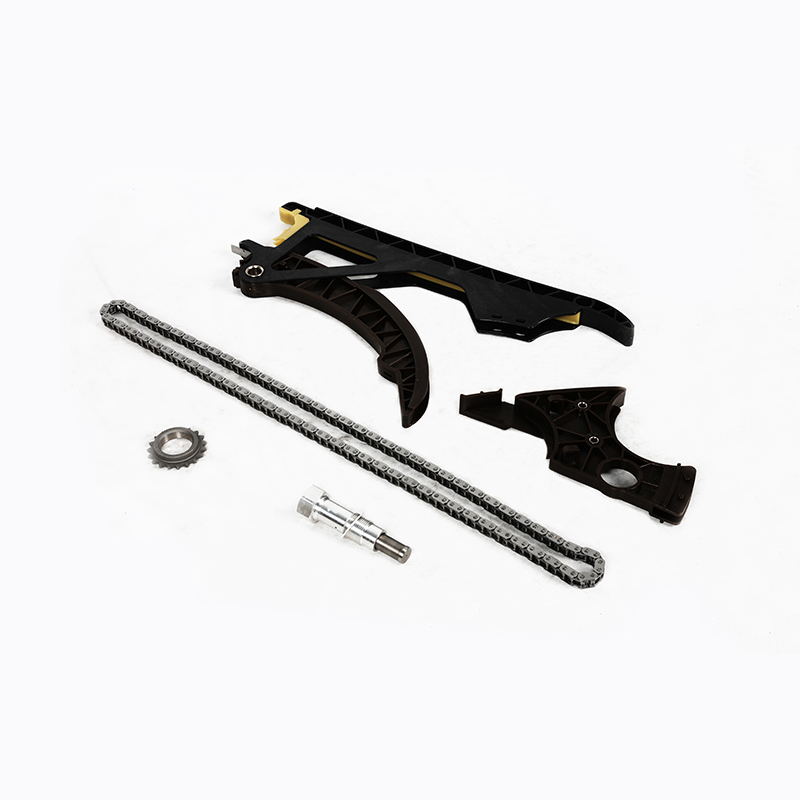
Buying components as a matched set also removes the risk of mixing parts from different suppliers with different wear states. Our complete timing chain kits bring chain, sprockets, tensioner, and guides together with the same engineered specification. The article on comparing the cost of a camshaft sprocket against a full timing kit explains the trade-off for buyers deciding between a single part and the full set.
Wholesale Car Engine Timing Chain Kit Manufacturers, FactoryHuzhou Jingtong Auto Parts Manufacturing Co., Ltd is China car engine timing chain kit manufacturers and OEM car engine timing chain kit ...View Product →Practical Checks Before Installation
Before a sprocket goes into an engine, a short inspection catches most quality problems. If the sprocket fails any of these checks, set it aside:
- Confirm the tooth count against the original part or the repair manual.
- Measure the bore with a micrometer or bore gauge; it should match the specified shaft diameter and show no ovality.
- Insert the key into the keyway; it should slide in without force and fit without visible side play.
- Run a fingertip over the tooth flanks and edges; there should be no burrs or sharp machining ridges.
- Check the timing marks on the sprocket face against the drawing, because marks that are out of position lead to wrong installation.
If a new sprocket fails on any of these points, the same problem may exist across the whole batch. That is when the quality control records described above become the decisive document.
High quality in a timing sprocket is not a single feature; it is the sum of the right steel, a hardening process that matches the loading, machining tolerances that keep timing correct, and a production environment that holds those tolerances consistently across every batch. Buyers who verify these four areas before purchase avoid the most common causes of timing system failure and protect the labor investment in every repair.
 View More >>
 View More >>
 View More >>
 View More >>
 View More >>
 View More >>
 View More >>
 View More >>


