

 English
 русский
 عربى
 Español
Article Directory
- 1 Timing Sprocket Materials at a Glance
- 2 Why Powder Metallurgy Steel Dominates
- 3 Carbon Steel and Alloy Steel for the Hardest Positions
- 4 Heat Treatment Is Half the Answer
- 5 What About Nylon Teeth and Plastic Sprockets?
- 6 What a Worn Sprocket Tells You
- 7 How to Choose a Replacement Timing Sprocket
- 8 The Bottom Line
Most timing sprockets used in modern engines are made from powder metallurgy steel, hardened carbon steel, alloy steel, or cast iron. Before you buy a replacement, that choice is the first thing to check: the material determines how the tooth flank wears, how much chain noise develops, and whether the sprocket will still be serviceable at 150,000 miles. If you are selecting a sprocket for a chain-driven engine, the practical answer is simple—choose sintered steel or case-hardened alloy steel for the main timing drive, and reserve other materials for specific cases.
The reason is not just hardness. Sprocket material affects the way the chain seats on the teeth, the clearance between rollers and tooth flanks, and the fatigue life of the part under high chain tension. A chain and a sprocket wear together as a set. If one is made from an incompatible material, you can get accelerated wear in both.
Timing Sprocket Materials at a Glance
The table below summarizes the common material groups, their typical applications, and why they are used.
| Material | Typical location | Why it is used | Main limitation |
|---|---|---|---|
| Powder metallurgy steel (sintered iron-carbon) | Camshaft sprockets, some crankshaft sprockets | Accurate tooth form, oil retention, economical at volume | Density varies; poor quality PM is brittle |
| Medium-carbon steel, e.g. C45/1045 | Crankshaft sprockets, higher-load positions | Strong core, can be induction-hardened | Higher machining cost |
| Low-alloy steel (chromium, nickel, molybdenum) | Heavy-duty and performance engines | High toughness and fatigue strength | More expensive than plain carbon steel |
| Cast iron | Older engines, industrial power units | Good wear resistance and vibration damping | Heavy and brittle in thin sections |
| Aluminum with nylon teeth | Classic engines | Quiet running when new | Nylon ages, cracks, and teeth break; obsolete for most chain drives |
| Engineering plastic | Light-load or auxiliary drives | Light, quiet, corrosion-resistant | Low load capacity and limited heat tolerance |
Why Powder Metallurgy Steel Dominates
A large share of camshaft sprockets in modern engines are not machined from solid bar; they are pressed from metal powder and sintered in a furnace. The PM route gives manufacturers a tooth profile that is accurate enough to mesh with a narrow timing chain without additional finishing. It also creates a fine, controlled porosity that holds a film of oil on the tooth face. When the engine is cold and the oil has drained down, that retained lubrication helps reduce noise and wear during the first seconds of startup.
The trade-off is that PM sprockets are only as good as their density and heat treatment. Cheap parts with excessive porosity can wear quickly or break a tooth. For the highest-load PM parts, a sintered preform can be powder-forged to near full density, giving a strength level close to wrought steel.
If you are sourcing replacements, the key is to look for parts from a manufacturer that controls density and heat treatment consistently. You can see how engine-matched sprockets are listed across vehicle families on our engine-matched timing sprockets page.
 Wholesale Timing Sprocket Manufacturers, OEM Factory - Huzhou Jingtong Auto PartHuzhou Jingtong Auto Parts Manufacturing Co., Ltd is China car engine Timing Sprocket manufacturers and OEM car engine Timing Sprocket fa...View Product →
Carbon Steel and Alloy Steel for the Hardest Positions
Not every sprocket should be PM. The crankshaft sprocket often carries higher chain load, and in some engines it is machined from solid bar rather than pressed. Medium-carbon steel such as C45 or 1045 is a common starting point because it balances machineability with core strength.
After machining, the tooth flanks are often induction-hardened or carburized. Alloy steels with chromium, nickel, or molybdenum add case toughness and fatigue resistance. These grades are more common in heavy-duty or performance engines where the chain runs under higher tension and more start-stop cycles.
The practical difference is not that one material is always better. A well-made PM sprocket can outlast a poorly made billet sprocket. The point is to match the material to the load and to verify the heat treatment, not to judge a part by manufacturing route alone. For a fuller breakdown of failure points, see our crankshaft timing sprocket guide.
Heat Treatment Is Half the Answer
A sprocket can be made from the right alloy and still fail if the heat treatment is wrong. Many OEM sprockets are case-hardened or induction-hardened with tooth flank hardness in the 45–55 HRC range. Core hardness is kept lower so the tooth can bend slightly under shock load rather than snap.
When you evaluate a sprocket, ask for the hardness range and the hardening process. “Hardened” alone means little; a through-hardened sprocket can be brittle, while an unhardened sprocket can lose its tooth form after modest mileage. This is why manufacturers that make sprockets against known chain standards tend to control the tooth profile and the hardness together. We explain this in more detail in our article on OEM sprocket standards and heat treatment.
What About Nylon Teeth and Plastic Sprockets?
Some older engine designs used an aluminum sprocket body with nylon teeth molded over the rim. These sprockets were quiet when new, but they were not a long-term solution. Nylon absorbs oil and swells, then becomes brittle as it ages; teeth can crack off, and the chain can jump a tooth. If you restore one of these engines, most specialists move to a steel or PM sprocket that fits the same chain pitch.
Engineering plastics still appear in some light-load auxiliary drives. In a main timing drive, plastics do not combine the strength, heat tolerance, and dimensional stability needed for years of service. Stainless steel is also uncommon in production timing sprockets because the corrosion advantage is rarely needed inside a sealed, oil-filled engine.
Where Cast Iron Still Shows Up
Cast iron is sometimes found in older automotive engines and industrial power units. It wears well and absorbs vibration, so it remains in service in low-speed, heavy-duty environments. But it is heavier and thicker than a comparable steel sprocket, and modern engine packaging generally leaves no room for it.
What a Worn Sprocket Tells You
Before removing the sprocket, look at the teeth. These patterns are practical clues that help you judge whether the material and heat treatment were suitable.
- Hooked teeth on the loaded flank usually mean the sprocket is softer than the chain, or the chain has stretched enough to change the pitch angle.
- A polished but still straight tooth profile suggests normal service; replace the sprocket together with the chain.
- A broken tooth is less common and often points to a brittle hardened case, excessive shock load, or a chain jump during engine rotation.
These observations do not replace measuring chain stretch and sprocket diameter, but they tell you whether the material choice was appropriate in the first place.
How to Choose a Replacement Timing Sprocket
Start with the part number from the engine manufacturer, then verify the following before buying.
- Number of teeth and chain pitch: matching the tooth count is not enough; the chain pitch and roller width must also fit.
- Bore diameter, keyway width, and hub offset: small differences in these dimensions cause fit problems on the crankshaft or camshaft.
- Flank hardness and hardening method: ask for a hardness range, not just the word “hardened.”
- Tooth profile and backlash limits: a sprocket with incorrect tooth spacing can make the chain noisy and increase wear.
- Chain pairing: never install a new sprocket with an old chain unless the chain is within its wear limit.
Bore and keyway tolerances are the most common cause of installation problems. A bore only a few hundredths of a millimeter too small may need rework; one too large can let the sprocket rock on the shaft. Our note on sprocket bore, keyway, and backlash specifications explains how these dimensions interact.
For non-OEM sourcing, universal timing sprockets can be a practical starting point, but you must measure the original sprocket’s bore, keyway, tooth width, and face width instead of assuming one “universal” size fits all.
Custom Universal timing sprocket Suppliers, OEM Company - Huzhou Jingtong Auto PAs China car engine Universal timing sprocket suppliers and OEM car engine Universal timing sprocket company, Huzhou Jingtong Auto Parts ...View Product →
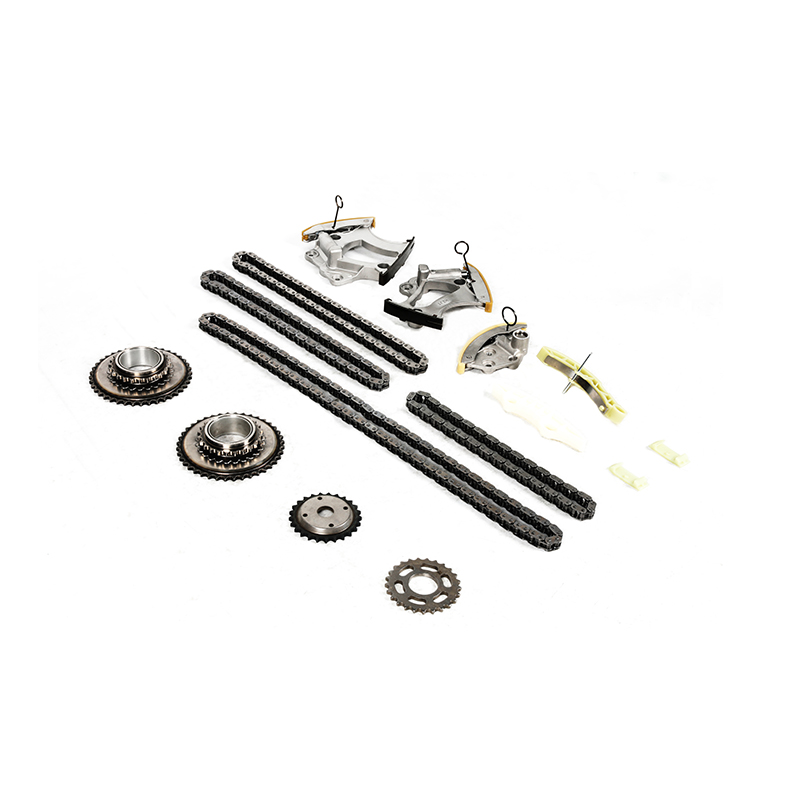
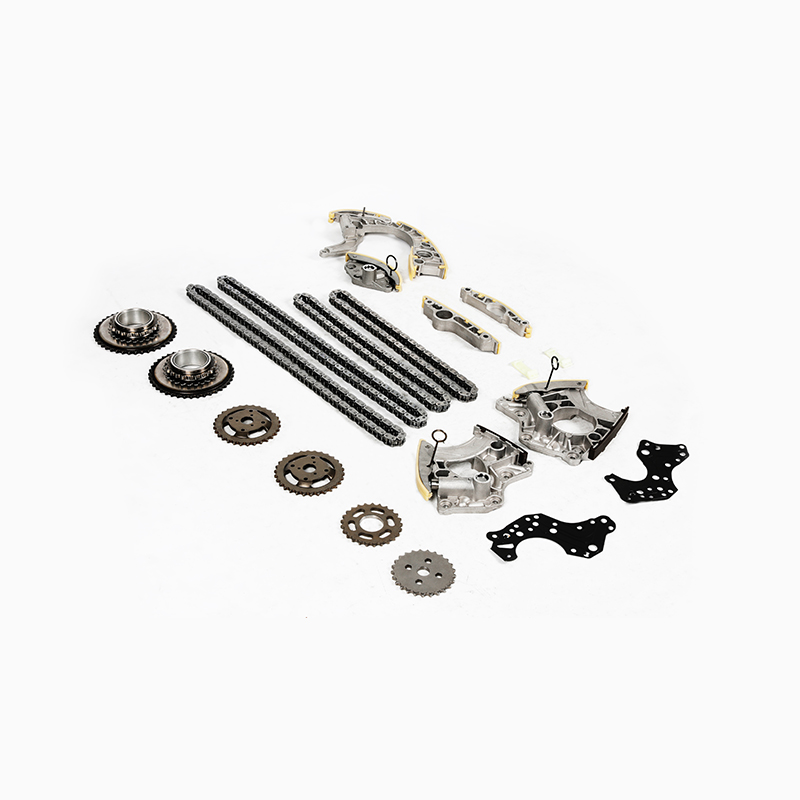
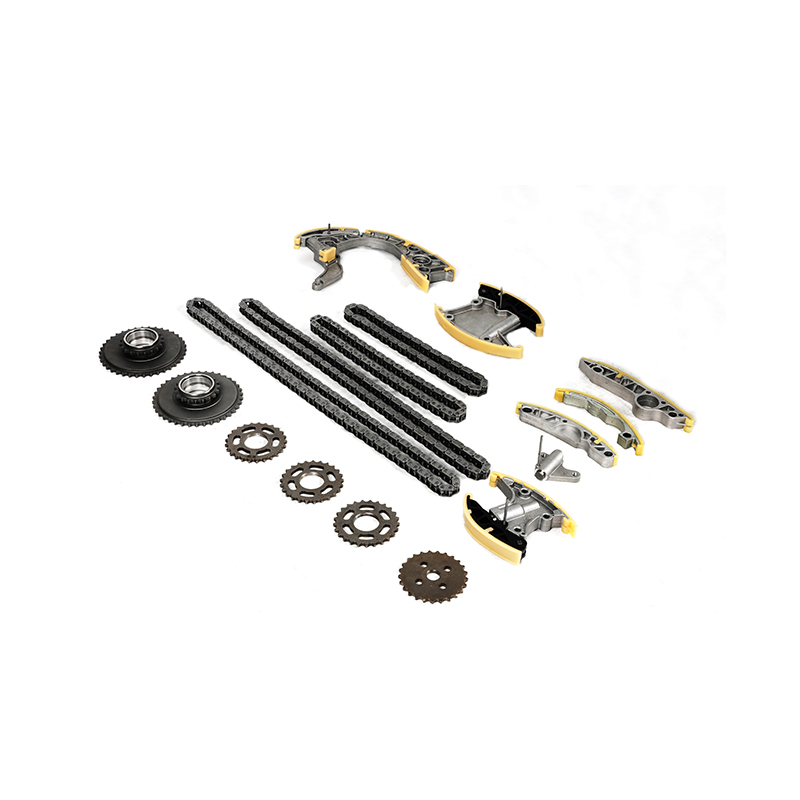
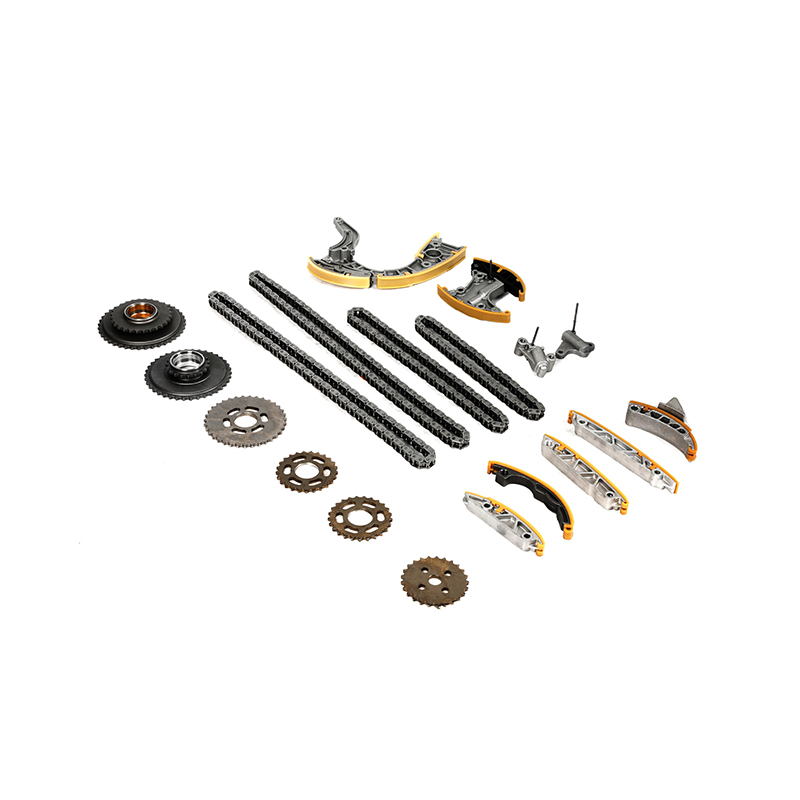
If you are replacing the whole drive, complete timing chain kits often keep the chain, guides, and sprockets as a matched set, which reduces the risk of mixing a new chain with a worn sprocket on the same tooth profile.
Wholesale Car Engine Timing Chain Kit Manufacturers, FactoryHuzhou Jingtong Auto Parts Manufacturing Co., Ltd is China car engine timing chain kit manufacturers and OEM car engine timing chain kit ...View Product →The Bottom Line
Timing sprocket selection starts with material and heat treatment. For almost every modern engine, that means powder metallurgy steel or hardened alloy/carbon steel. Cast iron, plastic, and nylon-tooth designs are either heavy, limited, or obsolete. The most durable replacement is one that matches the OEM tooth form, hardness, and bore tolerance, and is paired with the correct chain.
When you compare suppliers, do not settle for a material name alone. Ask for hardness data, inspect the teeth, and confirm the bore dimensions. A good sprocket should look consistent from tooth to tooth and fit the shaft with zero visible play.
 View More >>
 View More >>
 View More >>
 View More >>
 View More >>
 View More >>
 View More >>
 View More >>


