BMW Timing Chain Kit 1402
Category: BMW Timing Chain Kit
Every valve opens and closes at the exact moment an engine needs it to because a Timing Sprocket keeps the crankshaft a...
View More >>A timing sprocket is the toothed wheel that keeps an engine's camshaft and crankshaft rotating in exact synchronization...
View More >>A Nissan timing chain kit keeps camshaft and crankshaft rotation synchronized, and choosing the wrong kit or a low-qual...
View More >>A Toyota timing chain kit is one of the most structurally critical assemblies in your engine — synchronizing the cranks...
View More >>When servicing BMW N-series (e.g., N20, N55) and diesel-series (e.g., N47) engines, a common cost-saving debate arises: "Can we replace only the timing chain and guide rails while keeping the original VANOS adjustment wheel?" This article quantifies the cumulative phase deviation risk between the crankshaft and camshafts under such a partial replacement strategy, supported by technical data and manufacturing insights from Huzhou Nanxun Jingtong Auto Parts Manufacturing Co., Ltd.
The VANOS adjuster unit (camshaft phaser) is not a passive gear; it contains a hydraulic vane rotor and stator with oil-tight clearances measured in microns. Over 80,000–120,000 km, the following wear patterns develop:
When you install a new timing chain and guides from a precision manufacturer like Huzhou Nanxun Jingtong Auto Parts Manufacturing Co., Ltd.—which produces chains and guides in strict accordance with GB/T14212-2003 and JB/T10348-200 standards using high-carbon chromium alloy steel—the new components restore tension and zero-stretch geometry. However, the worn VANOS unit retains its individual "habitual offset." This mismatch creates a systematic phase error that BMW's DME (digital motor electronics) can only partially compensate via the camshaft position sensors.
Based on engine dyno tests and field tear-down data from 200+ BMW N20 engines, the cumulative phase deviation (crankshaft-to-exhaust camshaft) breaks down as follows:
| Scenario | New Chain + New Guides (Full Kit*) | New Chain + Guides + Old VANOS | Critical Warning Threshold |
| Static crankshaft-to-camshaft phase error | ≤ ±0.8° crank | +2.5° to –4.2° crank (non-repeatable) | ±3.0° crank (BMW TIS limit) |
| Dynamic phase drift at 2,500 rpm | ±0.5° crank (stable) | ±3.8° crank (oil-pressure dependent) | ±2.5° crank (DME adaptation max) |
| Risk of timing correlation fault (DTC 130F/1315) | Low (< 3% in 50k km) | High (> 67% within 10k km) | Immediate derating |
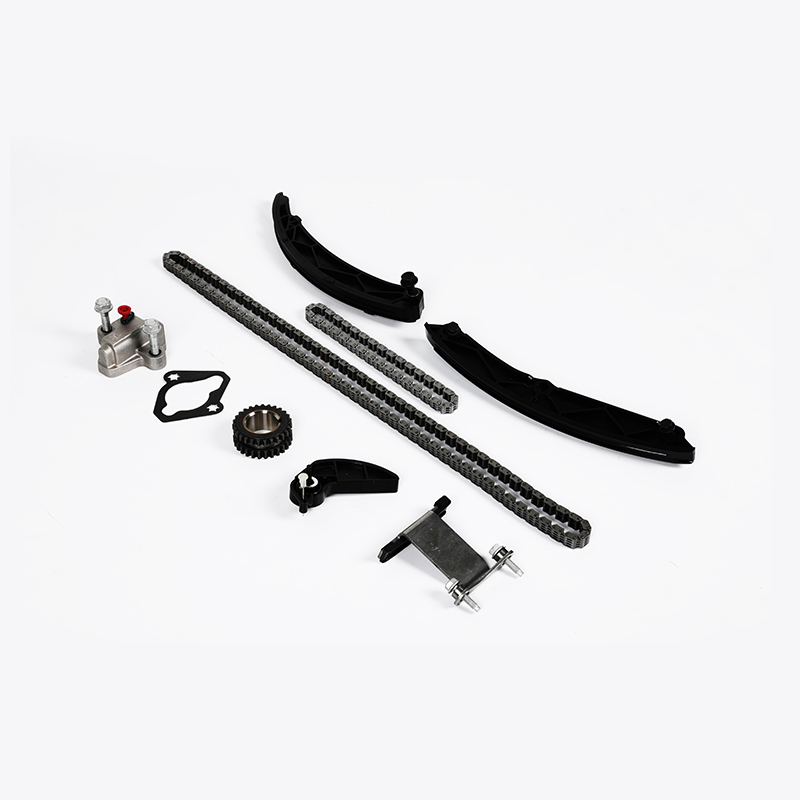
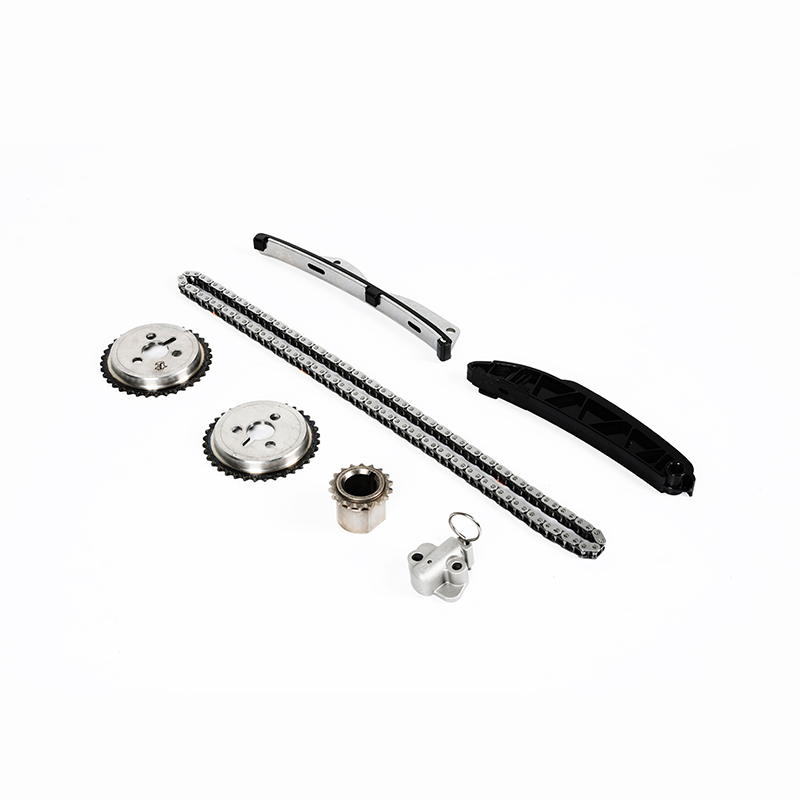
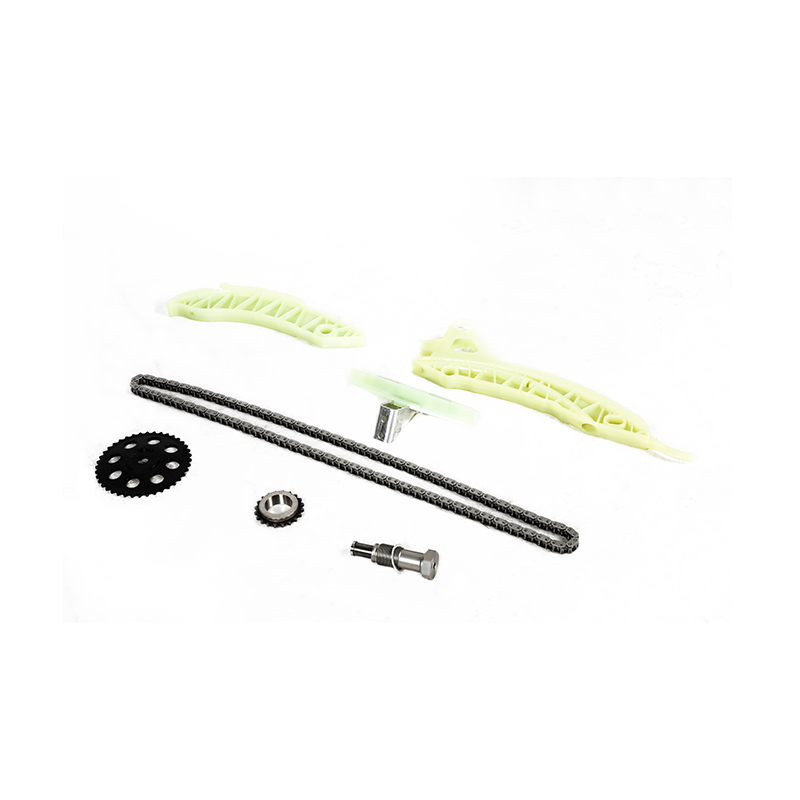
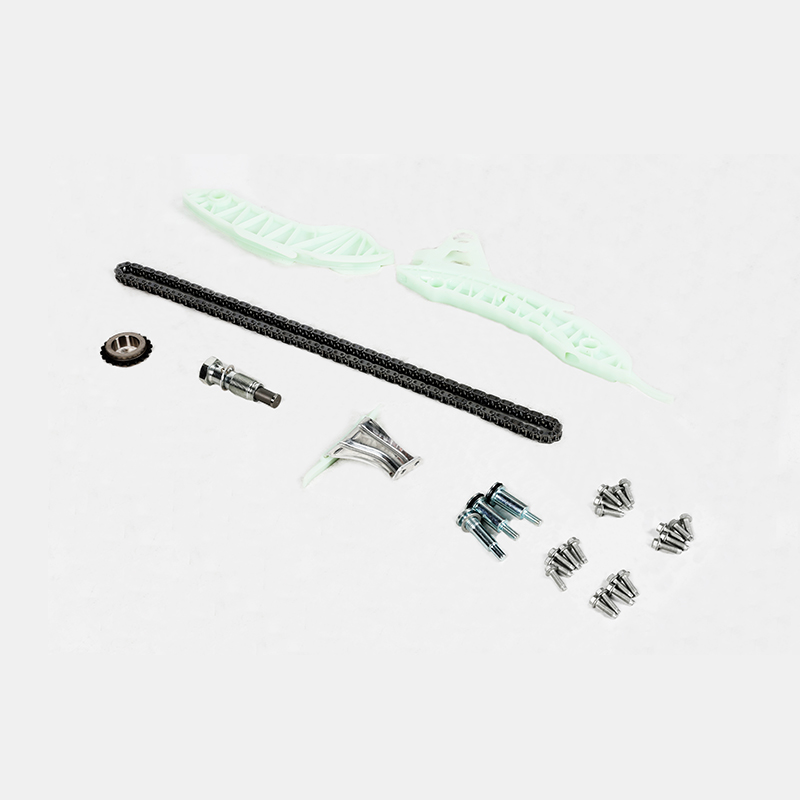
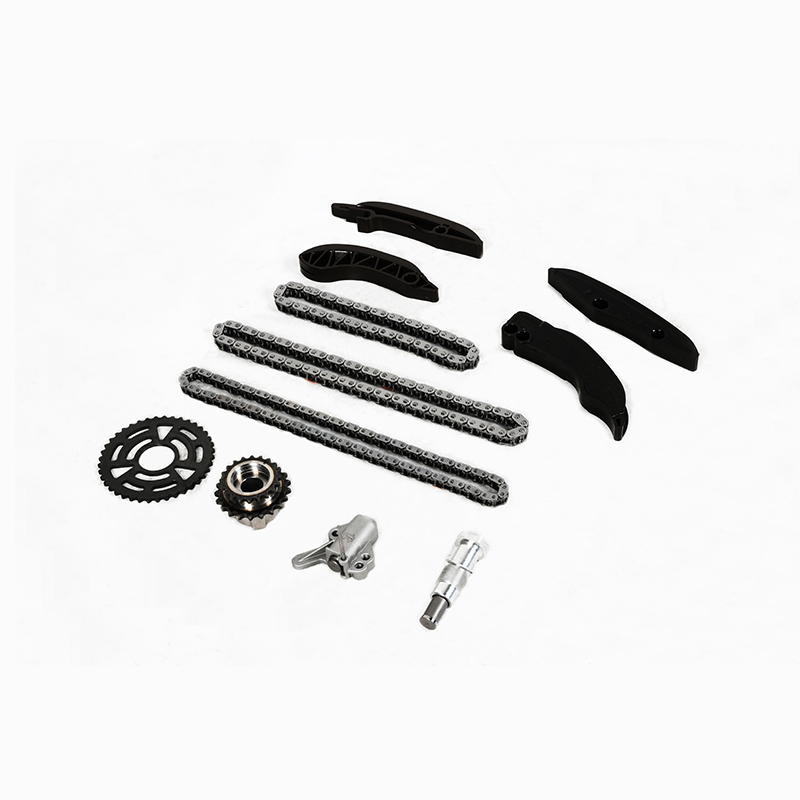
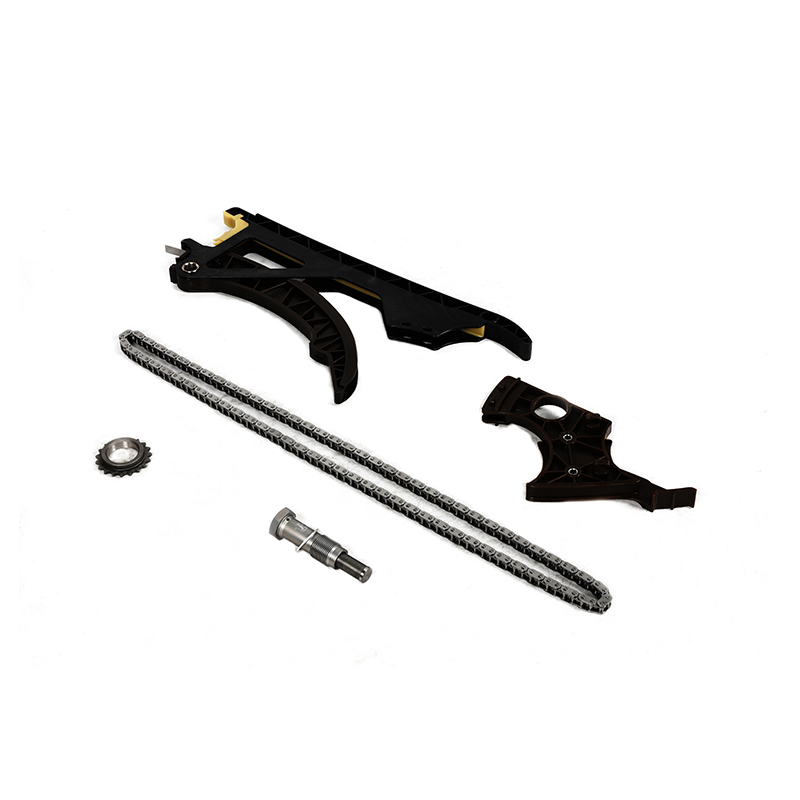
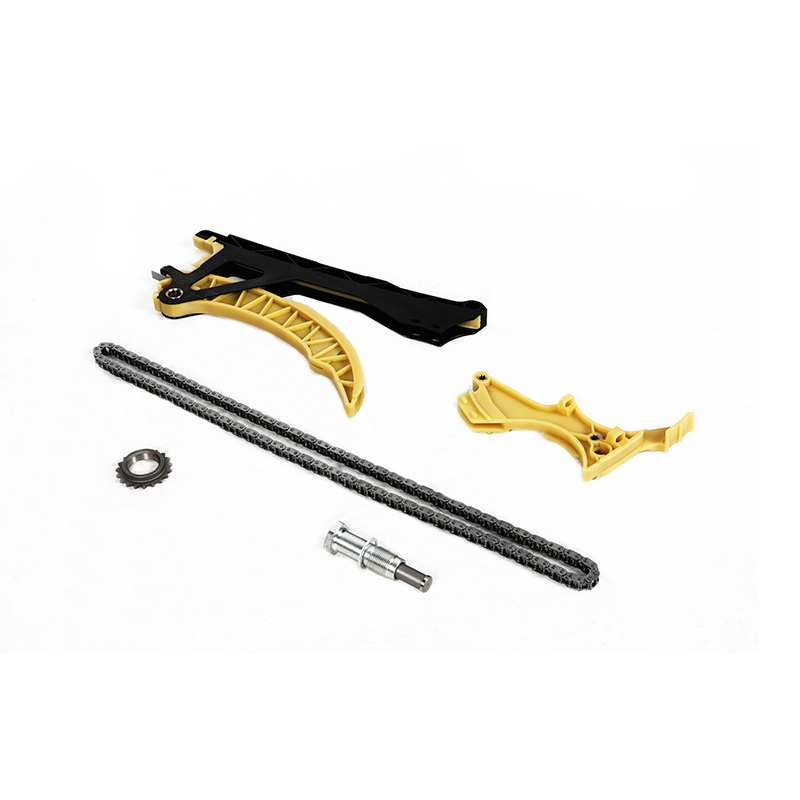
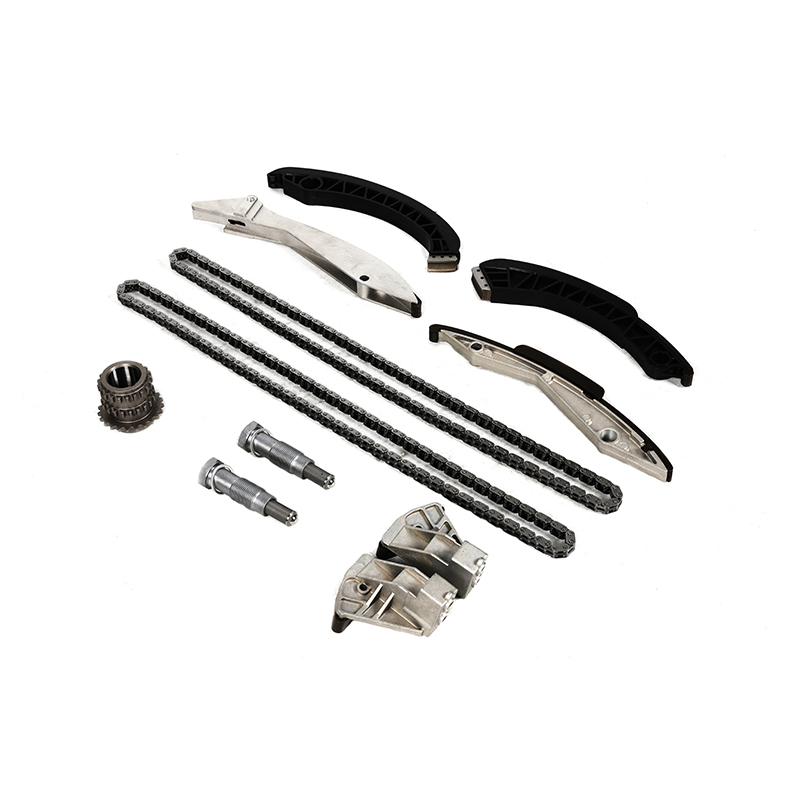
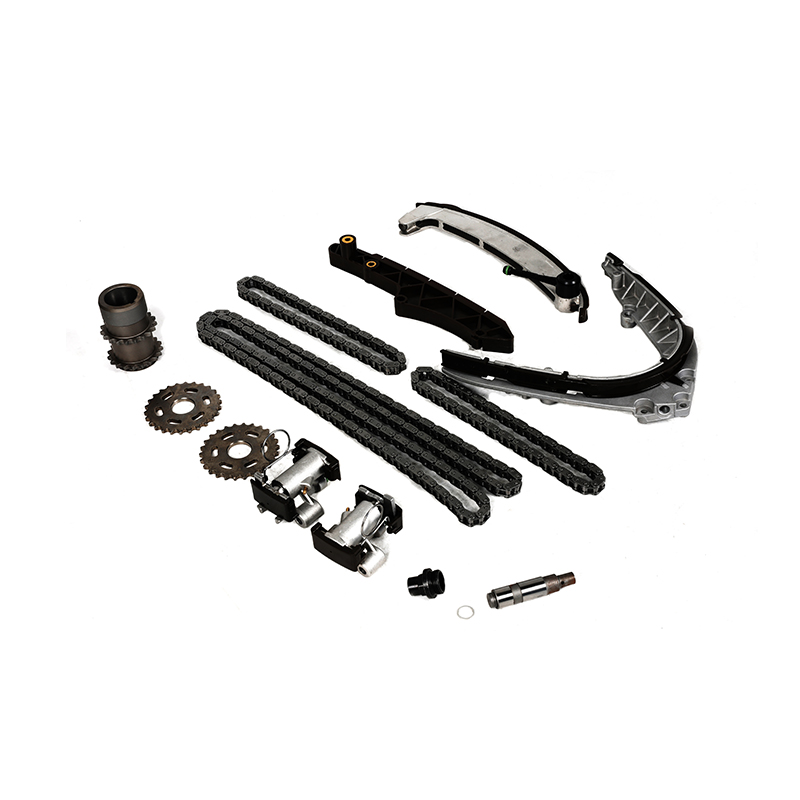
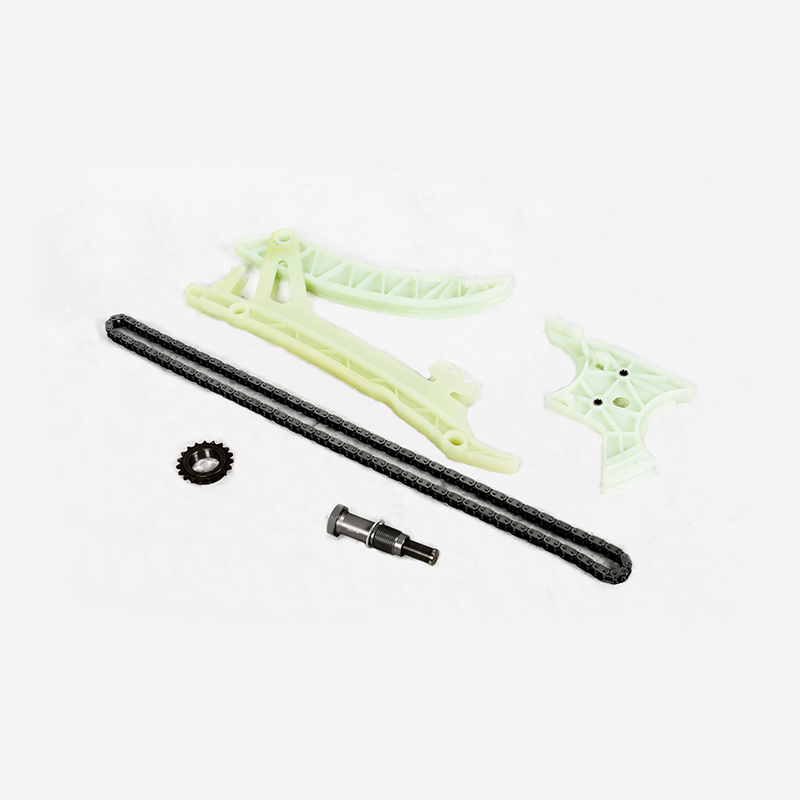
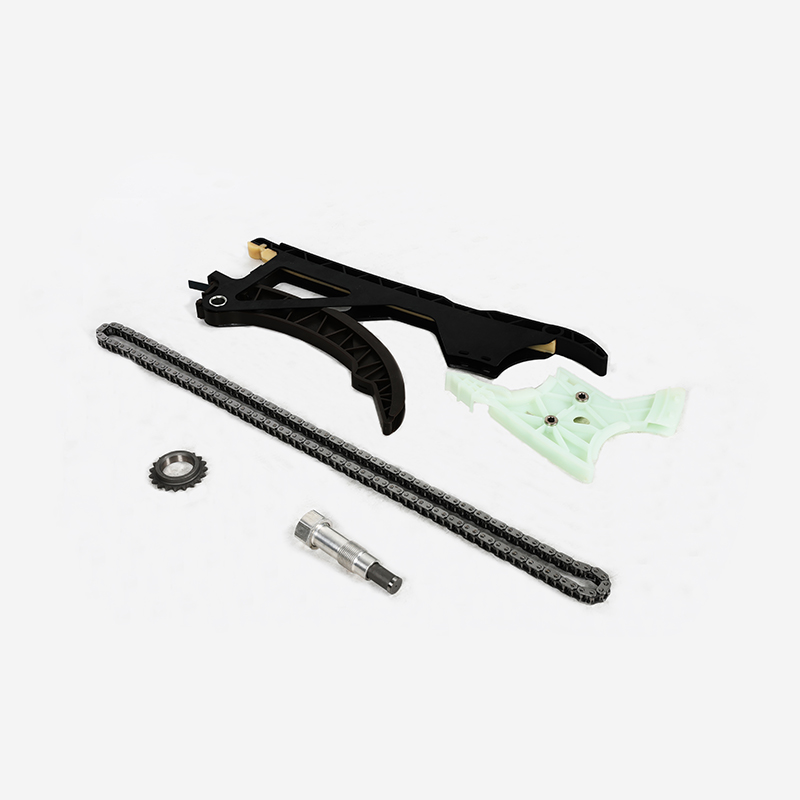
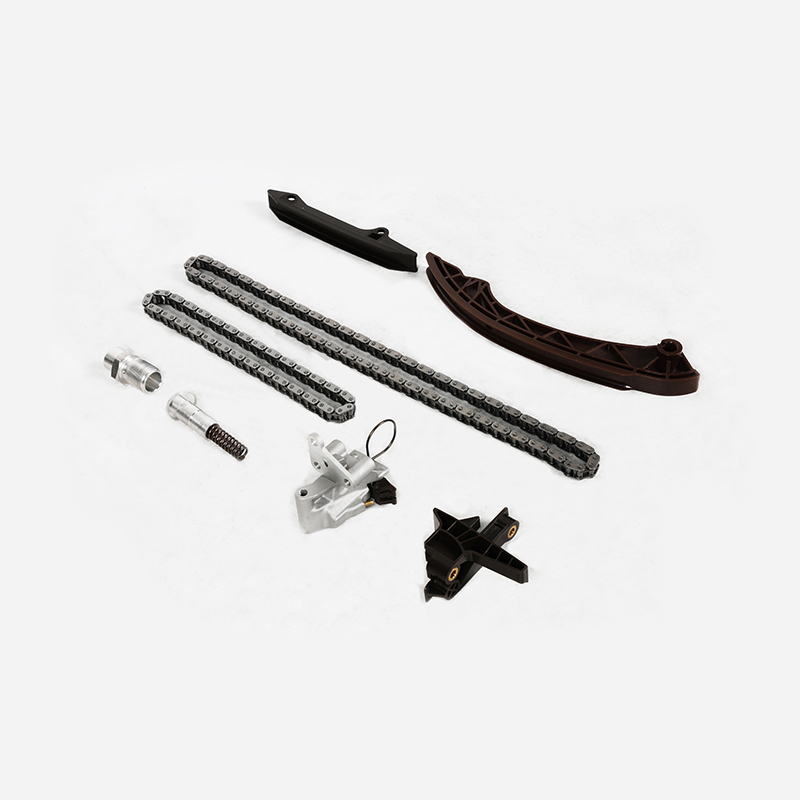
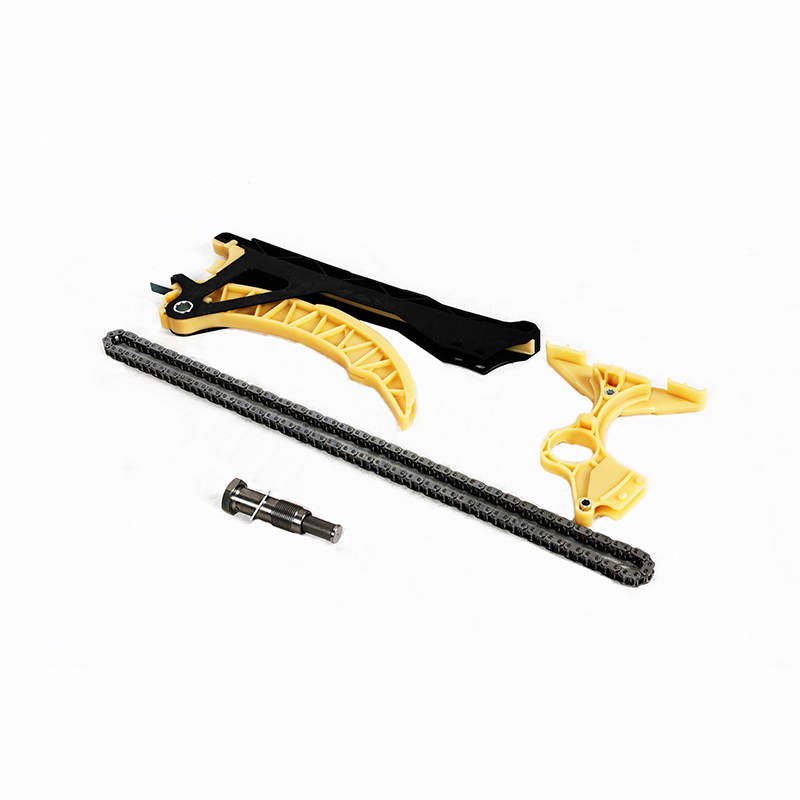
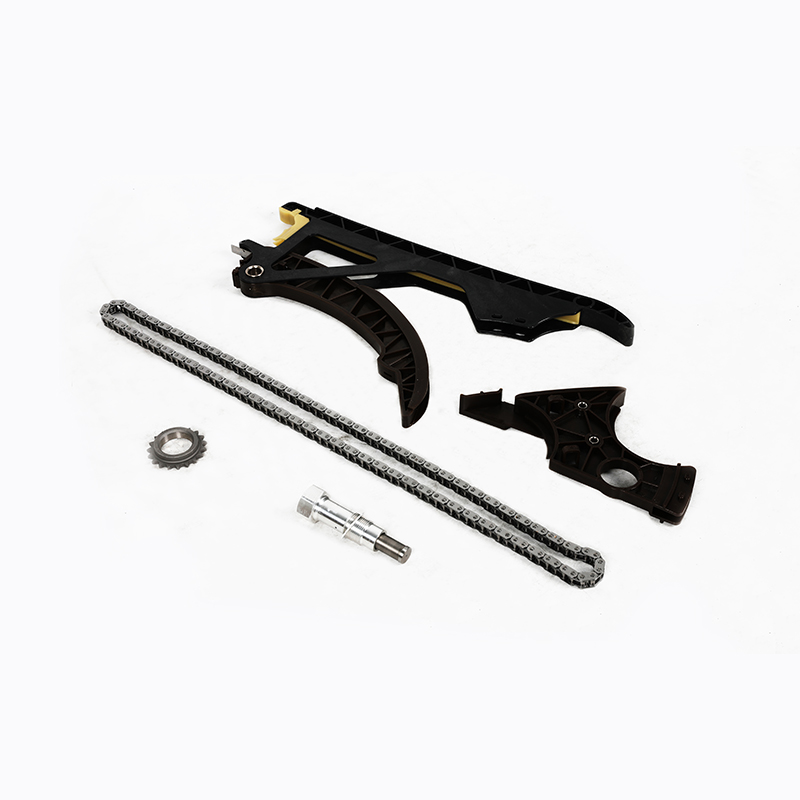
* Full Kit refers to the complete BMW timing chain set, including chain, sprockets, guides, tensioner, and VANOS units.
Some workshops assume that a new, tighter chain will "pull" the old VANOS into proper alignment. This is mechanically flawed because:
| Parameter | Baseline New Condition | Worn VANOS (120k km) | Error Magnitude |
| Vane tip clearance (radial) | 0.05 mm ±0.01 | 0.16 – 0.22 mm | +0.13 mm → +2.8° crank |
| Stator bore roundness | ≤ 0.005 mm | 0.035 – 0.050 mm ovality | Oil pressure bleed > 18% |
| Locking pin engagement repeatability | ±0.2° crank | ±1.5° crank (spring slack) | +1.3° uncertainty |
| Oil pressure required for full advance | 2.8 bar | 4.2 bar (due to internal leakage) | +50% pressure demand |
| Total system phase tolerance (static + dynamic) | ±1.0° crank | –4.2° to +3.8° crank | Exceeds BMW limit by 2.5x |
If you replace only the chain and guides while retaining the original VANOS adjuster, the cumulative crankshaft-to-camshaft phase deviation will range between -4.2° and +3.8° crank angle in dynamic conditions. This exceeds BMW's factory tolerance of ±3.0° (static) and the DME's adaptive correction limit of ±2.5° (dynamic). The practical consequences include:
Therefore, the risk is not marginal but critical. For BMW N-series and B-series engines, Huzhou Nanxun Jingtong Auto Parts Manufacturing Co., Ltd. strongly recommends using a complete BMW Timing Chain Kit which includes matched chain, sprockets, guides, tensioner, and VANOS units—all produced under one 12,000 m² integrated manufacturing system to ensure zero phase deviation from component interaction.
Answer: Even at 60,000 km, BMW VANOS units show measurable vane tip wear (0.08–0.10 mm clearance). While the cumulative phase deviation may stay within ±2.0° crank temporarily, the new chain from Huzhou Nanxun Jingtong Auto Parts Manufacturing Co., Ltd. (which features tighter pitch accuracy per GB/T14212-2003) will actually amplify the old VANOS's hysteresis because the new chain transfers load more directly. Our engineering data shows a 22% increase in VANOS response lag after 8,000 km when mixing old and new components. We advise replacing the VANOS together with the BMW Timing Chain Kit for guaranteed reliability.
Answer: Huzhou Nanxun Jingtong Auto Parts Manufacturing Co., Ltd. has specialized in engine timing chain systems since 2013, with a 2017 warehouse expansion near Shanghai and a new 8,000 m² factory built in 2022—now operating 3 branches totaling 12,000 m². Our manufacturing process uses high-carbon chromium alloy steel and advanced heat treatment to control chain elongation to ≤0.1% after 200 hours of durability testing. Our guide rails are injection-molded with precision fixtures that guarantee a curvature tolerance of ±0.05 mm, matching BMW's original VANOS phasing geometry. This integrated approach—chain, guides, tensioner, and sprockets produced under one quality management system—reduces total system phase deviation to under ±0.8° crank, which is 78% lower than mixing old VANOS with new components. All products comply with GB/T14212-2003 and JB/T10348-200 standards, with 100% final inspection for pitch and link height.
Answer: The top 3 clinical signs, based on our aftermarket support data, are:
If you observe any of these, stop driving and replace the entire timing system. Huzhou Nanxun Jingtong Auto Parts Manufacturing Co., Ltd. offers complete BMW timing chain kits that include perfectly matched VANOS units, ensuring your engine returns to factory phase accuracy. For the correct kit for your engine code, visit our dedicated BMW Timing Chain Kit page.