
 English
 русский
 عربى
 Español


Mitsubishi timing sprocket 0701
Category: Mitsubishi timing sprocket

Category: Mitsubishi timing sprocket

Category: Mitsubishi timing sprocket

Category: Mitsubishi timing sprocket

Category: Mitsubishi timing sprocket

Category: Mitsubishi timing sprocket

Category: Mitsubishi timing sprocket

Category: Mitsubishi timing sprocket

Category: Mitsubishi timing sprocket

Category: Mitsubishi timing sprocket

Category: Mitsubishi timing sprocket

Category: Mitsubishi timing sprocket

 Sep 30, 2026
 By admin
A front-engine rattle is a common complaint. When the owner says the timing pulley must be worn, the technician often f...
View More >> Sep 23, 2026
By admin
A timing sprocket that is off-center by just 25 micrometres does not look damaged, yet it can shift camshaft timing eno...
View More >> Sep 18, 2026
By admin
Every timing component that leaves a factory becomes part of a matched system. The buyer inspects material certificate...
View More >> Sep 16, 2026
By admin
When a replacement timing sprocket has the right tooth count but a bore machined one tolerance class wider than the fac...
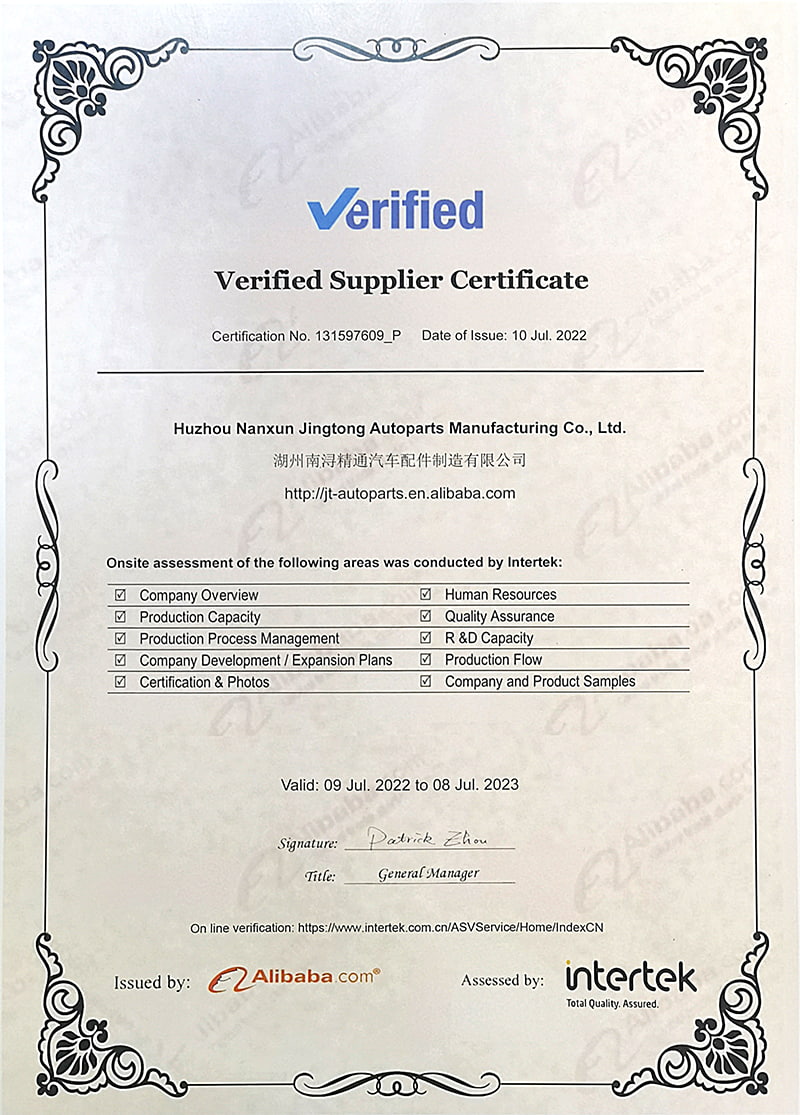
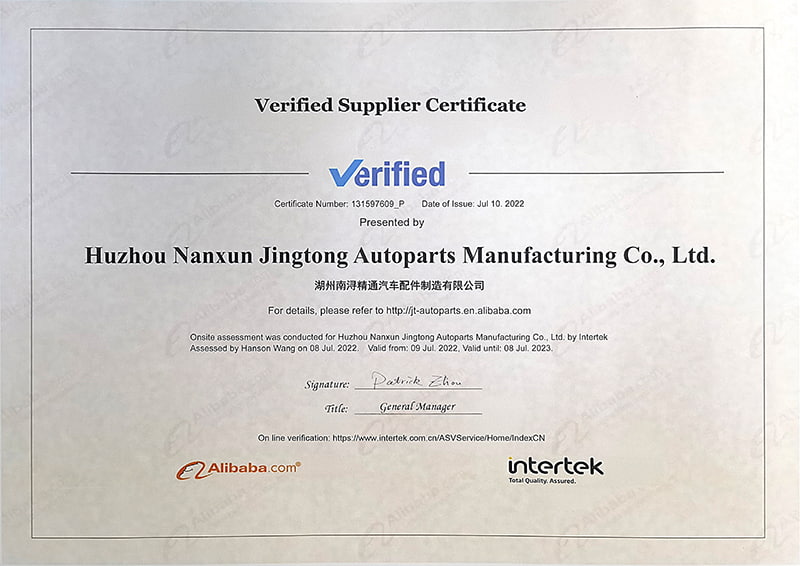
View More >>Huzhou Nanxun Jingtong Auto Parts Manufacturing Co., Ltd. is a China-based manufacturer of automotive engine timing chain system components. We produce Car Engine Mitsubishi timing sprocket Suppliers as part of a broader timing sprocket range covering Mitsubishi, Toyota, Nissan, Honda, Hyundai and other major engine families.
Our Mitsubishi timing sprocket line covers 11 active part numbers for the 4G6 family and related Mitsubishi engine platforms. Each sprocket is machined from high-carbon chromium alloy steel and heat treated to a defined surface hardness range. We produce both intake and exhaust camshaft sprockets as separate, clearly labeled parts.
The range includes sprockets for the 4G63 DOHC turbo (Lancer Evolution, Galant VR-4) and 4G64 SOHC naturally aspirated (Galant, Delica, L200) configurations. These are not interchangeable: tooth count, keyway angle, hub bore and chain width differ between the two engine codes. We maintain segregated inventory and separate production lines for each variant.
| Part Number | Engine Family | Position | Key Feature |
|---|---|---|---|
| 0701 | 4G63 DOHC Turbo | Intake | 38T, 0° keyway, 12.5 mm thick |
| 0702 | 4G63 DOHC Turbo | Exhaust | 38T, 180° keyway offset |
| 0703 | 4G64 SOHC NA | Camshaft | 40T, 15° keyway, 18 mm thick |
| 0704–0712 | 4G6 / 4B1 / 6G7 | Crank / Cam | Various tooth counts and hub profiles |
Mitsubishi timing sprockets are used across passenger cars, light commercial vehicles and performance applications. The 4G63 DOHC turbo sprocket must withstand higher valve spring loads (approximately 1,600 N chain tension) and higher operating temperatures than the 4G64 SOHC variant (approximately 1,100 N). We apply deeper carburization to the turbo sprocket to match these conditions.
Every Mitsubishi timing sprocket we produce is defined by four measurable properties: tooth profile and pitch accuracy, bore and keyway tolerance, surface hardness, and chain seating. These are the same properties that determine whether a sprocket holds timing under load for hundreds of thousands of cycles.
| Specification | 4G63 DOHC Turbo | 4G64 SOHC NA |
|---|---|---|
| Base material | SCM435H high-carbon chromium alloy | SCM420 carbon-moly steel |
| Surface hardness | 58–62 HRC | 52–56 HRC |
| Case depth | 0.8–1.2 mm | 0.4–0.6 mm |
| Bore tolerance | H7, 22.0 mm | H7, 24.0 mm |
| Keyway width | 3.0 mm ±0.05 | 4.0 mm ±0.05 |
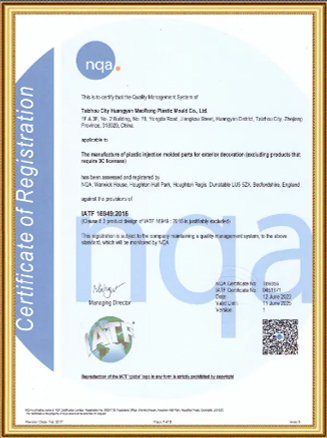
We inspect every production batch against GB/T14212-2003 and JB/T10348-200 standards. Our testing lab is equipped with a spectrometer, metallographic microscope, tension tester, low-temperature tester, X-ray tester, MPT, UT, CMM and video measurement machine. Finished sprockets undergo 100% inspection for tooth count, keyway angle and hub geometry before packing.
For Mitsubishi sprockets specifically, we run a chain seating test on every batch: a known-good chain is wrapped around the sprocket and rotated by hand. Rollers must seat fully in every tooth space with no clicking or climbing. Any batch that fails this test is rejected before it reaches inventory.
We produce Mitsubishi timing sprockets to standard OEM dimensions and also support customized configurations. Our R&D team can develop and produce sprockets according to customer drawings or samples. Customization options include:
For projects requiring a complete timing system, we also supply Mitsubishi Timing Chain Kit 11 components including chains, tensioners and guides matched to the sprocket specifications.
Mitsubishi timing sprockets are installed behind the timing cover and are not serviceable without disassembly. Correct installation requires verifying the engine code stamped on the block, confirming the camshaft nose diameter (22.0 mm for DOHC, 24.0 mm for SOHC), and aligning the keyway with the camshaft woodruff key. We supply intake and exhaust sprockets as separate parts with clear labeling to prevent mix-ups during assembly.
For maintenance planning, chain engineers apply a ten-percent wear rule: when tooth wear reaches 10% of tooth thickness, the sprocket must be replaced. Worn teeth change the effective pitch and cause the chain to climb. We recommend replacing the sprocket together with the chain, tensioner and guide as a set to maintain correct timing geometry.
To prepare an accurate Mitsubishi timing sprocket quotation, we need the following project information. This allows us to match the exact sprocket variant and confirm availability.
| Information Required | Why We Need It |
|---|---|
| Engine code (e.g., 4G63, 4G64, 4B11) | Determines tooth count, keyway angle and hub geometry |
| Vehicle model and year | Confirms VVT/MIVEC presence and variant changes |
| Sprocket position (intake, exhaust, crank) | Prevents intake/exhaust mix-ups |
| Quantity and packaging requirements | Determines production scheduling and shipping method |
| Sample or drawing (for custom parts) | Enables reverse engineering and tooling setup |
No. The 4G63 DOHC turbo sprocket has 38 teeth and a 3.0 mm keyway; the 4G64 SOHC sprocket has 40 teeth and a 4.0 mm keyway. The bore diameters differ (22.0 mm vs. 24.0 mm), and the chain contact widths are 7.0 mm and 8.0 mm respectively. These parts are not interchangeable and attempting to fit one on the other will cause timing failure.
Check the engine code stamped on the front face of the block, exhaust side, just below the cylinder head. The code appears as "4G63" or "4G64". Also confirm the camshaft nose diameter: 22.0 mm indicates DOHC, 24.0 mm indicates SOHC. For 4G63 Evolution VII–IX, confirm whether MIVEC variable valve timing is equipped.
We machine Mitsubishi sprockets from high-carbon chromium alloy steel. The 4G63 turbo sprocket uses SCM435H with a surface hardness of 58–62 HRC and case depth of 0.8–1.2 mm. The 4G64 SOHC sprocket uses SCM420 with 52–56 HRC and 0.4–0.6 mm case depth. Both grades comply with GB/T14212-2003 and JB/T10348-200 standards.
Yes. We supply complete timing chain kits for Mitsubishi applications, including chain, tensioner, guide and sprocket. The Mitsubishi Timing Chain Kit 11 range covers the same engine families as our sprocket line. We also produce timing chain kits for other major brands including Toyota K3Ve Car Engine Timing Chain Kit and Nissan Yd25 Car Engine Timing Chain Kit.
Our annual production capacity exceeds 5,000,000 single parts across all timing system components. We operate two manufacturing factories with a total floor area of 12,000 square meters and more than 100 employees, including 5 engineers and 5 technicians. Lead time depends on order quantity and current production scheduling; we confirm delivery dates when quoting.
We perform inspection after every process step and 100% inspection on finished sprockets for tooth count, keyway angle and hub geometry. Our testing lab runs spectrometer analysis, metallographic examination, hardness testing and chain seating checks on every batch. This ensures that a sprocket ordered today matches the dimensions and material properties of the same part number ordered six months from now.


No.99,Chuangyuan Road,Gaodun Village, Shimen Town, Tongxiang City, Zhejiang Province,China

+86-19957389130 / +86-573-88680799

www.jt-autoparts.com

Copyright ? Huzhou Jingtong Auto Parts Manufacturing Co., Ltd. All Rights Reserved. custom car engine Mitsubishi timing sprocket company
